Get Full Government Meeting Transcripts, Videos, & Alerts Forever!
Get email alerts on the Wetlands Policy topic
No spam. Unsubscribe anytime.
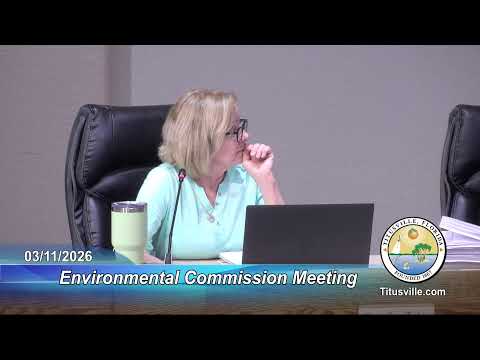
Titusville TEC removes permitting-style language from wetlands policy, clarifies 1.8% project limit
Summary
The Titusville Technical and Environmental Committee voted to strike permitting-style wording from Policy 1.16.0.4 and to clarify that the 1.8% wetland-impact allowance will be applied project-by-project; the committee also asked staff and the city attorney to draft tighter mitigation and conservation-easement language for review.
The Titusville Technical and Environmental Committee voted unanimously to remove an opening sentence from Policy 1.16.0.4 that members said read like regulatory permitting language rather than land‑use policy.
Mary, a TEC member who led the revision discussion, told the committee the struck language — phrases such as "significant site constraint" and "practicable design modification constraint" — risks conflating permitting rules with the city’s land‑use review. "This phrase is not appropriate in flu policy 1.16.0.4," she said, arguing the committee should keep land‑use policy separate from agency permitting standards.
The move came after a question from the committee about whether the policy’s opening sentence duplicated provisions already covered by Policy 1.16.0.3. Member Miller moved to strike the sentence; the motion passed on a roll‑call vote with all voting yes.
The committee also accepted revised wording to Policy 1.16.0.3 to clarify that the 1.8% limit on wetland impacts will be applied on a project‑by‑project basis, consistent with county practice. "The 1.8% is to be applied project by project just like Darcy in the county do," Mary said while explaining the tweak; the committee voted to adopt the change.
Attorney David, the city attorney, advised members on implementation language and recommended that the city prefer conservation easements executed in the city’s favor over simple deed restrictions because easements provide the city with inspection and enforcement rights. "A conservation easement executed in favor of the city of Titusville gives the city both enforcement rights and entry and inspection rights," David said.
Committee discussion also covered mitigation and documentation: members debated whether required preservation should be proportional to cumulative impacts or simply documented through an on‑site conservation easement. They agreed to simplify the mitigation direction to require preservation and maintenance of remaining wetland acreage documented by an instrument acceptable to the city (David said he would draft language favoring conservation easements) and to have staff (Brad/Lily) review the proposed language.
Actions at a glance: the committee (a) struck the initial sentence of Policy 1.16.0.4, (b) adopted project‑by‑project language for the 1.8% limit in Policy 1.16.0.3, and (c) directed staff and the city attorney to draft tightened mitigation and easement language for review.
The committee agreed to forward the revised recommendations to city staff (Brad) for incorporation and legal review; members indicated they expect to continue wetlands work in upcoming meetings until the conservation element language and implementation details are finalized.