Get Full Government Meeting Transcripts, Videos, & Alerts Forever!
Get email alerts on the Medical Debt Relief topic
No spam. Unsubscribe anytime.
Lexington reports $12.6 million in medical debt abolished under new relief program
Summary
City staff updated the council on a partnership with nonprofit Undue Medical Debt that used a $1 million ARPA allotment to abolish about $12.6 million in medical debt for roughly 6,484 Fayette County residents; staff said the program yields roughly $100 in debt relief per $1 spent and recommended quarterly reports when abolishments occur.
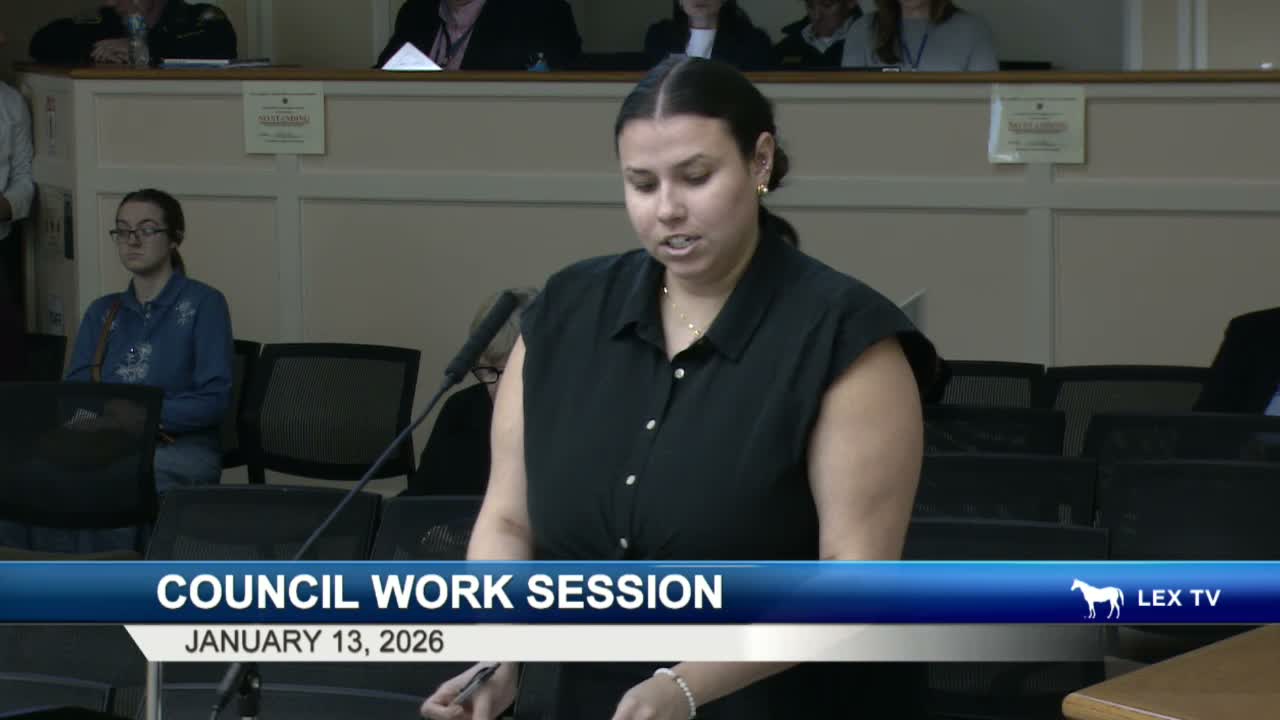
Victoria Cruz Faulk, legislative aide to Vice Mayor Dan Wu, told the Urban County Council on Jan. 13 that Lexington's medical-debt relief partnership with nonprofit Undue Medical Debt has produced measurable results in its first round.
Faulk said the council previously authorized a $1,000,000 allotment from American Rescue Plan Act interest earnings to fund the program. She said Undue Medical Debt purchases qualifying files from hospitals or collectors for pennies on the dollar, performs eligibility screening and address-verification work, and issues notices to affected residents so abolished balances cannot be resold. "On average, every $1 spent eliminates more than $100 in medical debt for residents," Faulk said.
City materials presented at the work session show the first local abolishment removed approximately $12,600,000 in medical debt and benefited about 6,484 residents; the purchased file cited in the presentation covered just over 60,000 people with a total face value of about $127,600,000. Faulk told council that the program has expended $90,254.49 to date on the local abolishment and related program costs.
Faulk described eligibility rules Undue Medical Debt applies: candidates must be Lexington-Fayette County residents and either have household income between 0 and 400% of the federal poverty guidelines or have medical debt equal to at least 5% of annual household income; the nonprofit determines final eligibility for files it purchases. Faulk noted the program may purchase mixed files that include non-Lexington residents; she said only debt abolished using the city's ARPA funds benefits Lexington residents.
Several council members asked follow-up questions. Councilmember Hayhoe asked for the average and largest abolished amounts; Faulk said the average abolishment per person was $1,949 and the largest single abolition in the presented file was $230,000. Councilmember Boone asked whether staff could show the distribution by council district; Faulk said she has ZIP-code data and recommended working with GIS to map ZIP-code results overlaid with council districts.
Faulk emphasized program safeguards and administrative costs: Undue Medical Debt applies a 15% indirect cost rate, maintains secure technology to meet HIPAA standards, pays for data-cleaning and mailings, and contracts with providers for legal and reporting work. She recommended the council receive quarterly updates in quarters when abolishments occur, or committee updates through Budget, Finance and Economic Development if council prefers.
Vice Mayor Dan Wu and several council members praised the program at the meeting. "These testimonials ultimately make us remember that these are not just a bunch of statistics," Vice Mayor Wu said, underscoring the personal impact of relatively modest amounts of relief for some households. Several members thanked staff for transparency and recommended continued reporting to the council.
The council did not take a formal vote on the presentation; staff indicated next steps include continuing negotiations by Undue Medical Debt with providers, securing private donations to cover non-Lexington portions of purchased files, and preparing future abolishment reports for the council.