Get Full Government Meeting Transcripts, Videos, & Alerts Forever!
Get email alerts on the Opioid Abatement topic
No spam. Unsubscribe anytime.
Community callers urge speedy, equity-focused use of opioid‑abatement funds and proposed mini/macro grant structure
Summary
Public commenters urged the council to prioritize immediate opioid‑abatement funding for grassroots organizations and community-based services, citing committee recommendations for mini grants ($5,000–$25,000) and macro grants ($25,000–$500,000) and asking for grant management support to ensure equity and access.
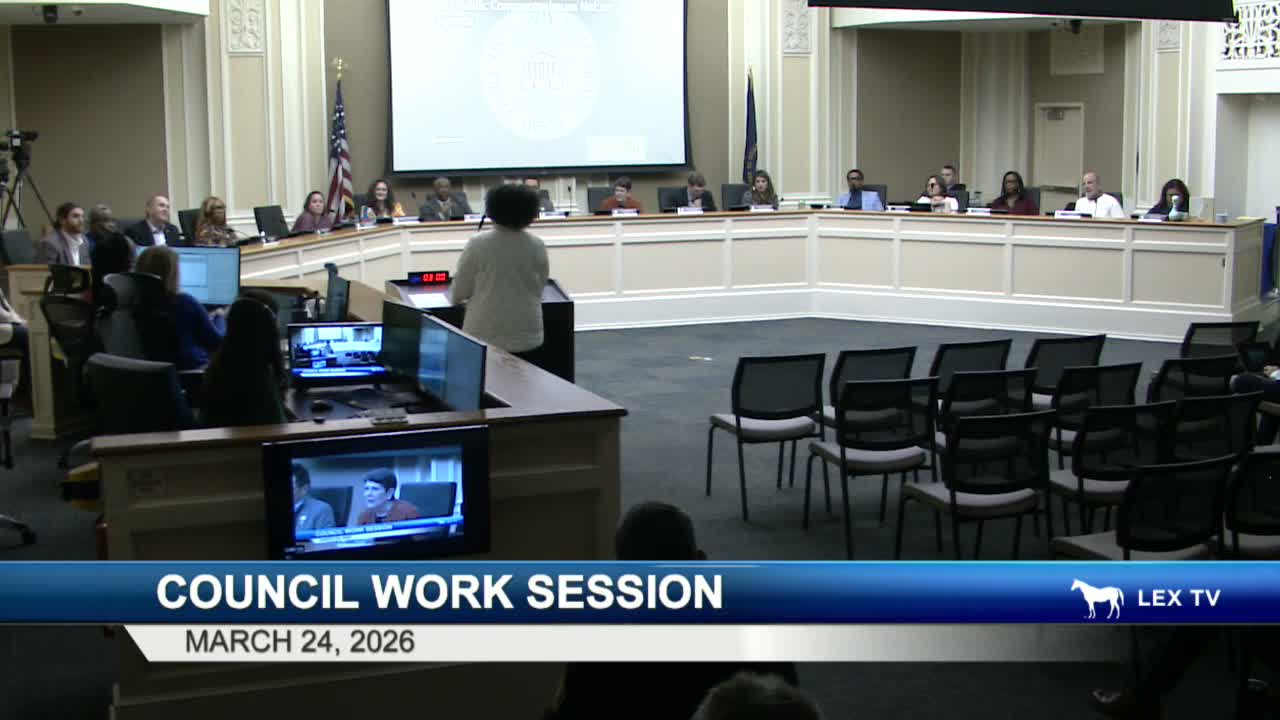
Two public commenters told the council the city should move promptly to implement the opioid‑abatement committee recommendations and ensure funding reaches grassroots organizations.
Danisha Taylor, representing Tracy's House, a recovery home, told councilors the recovery community faces urgent needs amid changes to Medicaid and community services and asked that allocations be made with attention to timely access to services.
Trevor Davis, statewide campaign organizer with Vocal Kentucky, urged council to follow the opioid abatement committee's recommendations (finalized July 11, 2025). He summarized a grant structure included in those recommendations: "mini grants" of $5,000–$25,000 for grassroots and community‑based organizations, and "macro grants" of $25,000–$500,000 over a two‑year cycle for established nonprofits, health systems and coalitions. Davis also urged an online application portal, grant management staff to monitor reports and provide technical assistance, and funding for mobile distribution, harm‑reduction supplies, supportive living assistance and reentry services. He said he had already emailed council members copies of the recommendations for review.
Commenters emphasized equity and community involvement in grant administration. Council did not take a formal vote on changes to opioid‑abatement allocations during the work session; the remarks were part of the public comment period and intended to inform council deliberations.