Get Full Government Meeting Transcripts, Videos, & Alerts Forever!
Get email alerts on the Energy Solar topic
No spam. Unsubscribe anytime.
Council delays vote on Hailey Pike landfill solar lease after members press for stronger community benefits and installation commitments
Summary
Councilmembers and staff debated redlines to a proposed ground lease with Eden Renewables for a solar array at the Hailey Pike landfill, focusing on community benefits, decommissioning bonds, installation methods on capped cells, and negotiation participation; Vice Mayor Wu moved to postpone the item to Feb. 24 and the motion passed.
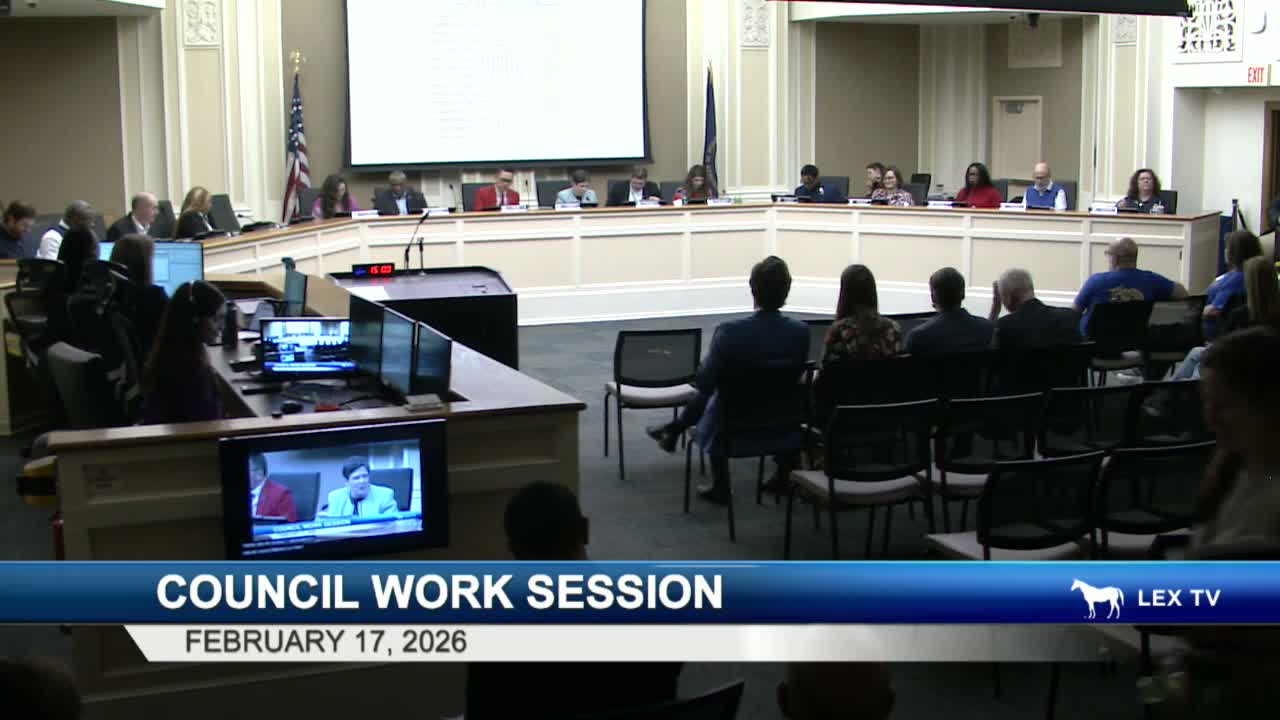
Councilmembers extensively questioned staff and the developer on a proposed ground lease that would allow Eden Renewables to build a solar array at the Hailey Pike landfill, then voted to postpone consideration to the February 24 work session.
Staff summarized redline edits to the draft lease and packet exhibits, including a placeholder acreage in Exhibit B pending a complete survey, edits to construction‑period language to accommodate possible federal changes to investment tax credits and safe‑harbor dates, and a clarification that the tenant would not lease the full Area B so fence placement would avoid penetrating the landfill cap. Richard Dugas of Environmental Quality and Public Works said Eden agreed to mow about 40 acres the vendor would not lease.
Council debate centered on money and risk. Staff reported the community benefits agreement (CBA) had been raised from $125 per megawatt to $250 per megawatt annually for 20 years but added revert language allowing the CBA to be reduced if the Kentucky Division of Waste Management required extended post‑closure monitoring resulting from construction activities. Councilmember Morton and others said the proposed CBA is small relative to potential project earnings and asked whether the CBA could be tied to a percentage of cash flow; the developer and staff said project revenues are not yet known because capacity, site design and public‑service commission clarity will be required after land control and that landfill conversions are more expensive and have different financial profiles than standard solar sites.
Councilmembers also pressed technical and environmental questions. Vice Mayor Wu asked whether the lease would include explicit installation language for uncapped agricultural parcels in addition to capped cells; the developer said the intent is to use a weighted ballast (above‑grade spread footings) across the site to avoid driven pilings through the cap, to minimize subsurface disturbance and to restore surface soils as close as feasible to pre‑development conditions, but said a blanket promise to “leave the soil as found” could be infeasible in every case and asked for drafting flexibility. Staff said the lease’s assignment and credit‑review provisions had been tightened so LFUCG can review the creditworthiness of assignees in many transfer scenarios.
On tax and end‑of‑life protections, staff said decommissioning language was revised and now references a typical industry benchmark of about $0.45 per watt for bonding rather than a single hard dollar amount; the term length for bond obligations was also adjusted in response to council concerns.
Labor and community benefits were recurring themes. The developer representatives said they intend to use local union labor and are designing workforce‑development partnerships with local schools; Eden Renewables’ vice president of social impact said students have been involved in co‑designing parts of the community‑benefit planning process. Multiple councilmembers said they want a council member to sit at the negotiation table as the administration finalizes details, and staff said future documents such as an industrial‑revenue bond (IRB) and pilot (payment‑in‑lieu) agreement typically return to council for approval, depending on how the final resolution is written.
Vice Mayor Wu moved to postpone the new‑business lease item to the council’s Feb. 24 work session to allow more time for written commitments and negotiation; Councilmember Curtis seconded and the motion passed. The council did not record individual roll‑call vote tallies in the session transcript.
The council’s action leaves open the key open items — the final CBA level and duration, precise decommissioning bonding, written installation and reclamation commitments for uncapped agricultural areas, and whether a named council negotiator will formally join administration negotiations. Staff indicated the lease will be updated to reflect negotiated changes and that further approvals (IRB/pilot) would be processed per council direction.