Get Full Government Meeting Transcripts, Videos, & Alerts Forever!
Get email alerts on the Parks And Recreation topic
No spam. Unsubscribe anytime.
Resident urges council to protect recreation priorities as $810,000 parks master‑plan contract is considered
Summary
David Hill, a resident in District 10, told the Lexington Fayette Urban County Council that the city should not passively award an $810,000 contract for a new parks master plan while recommendations from the 2024 plan remain only partially implemented and urged explicit integration of the Parks Trust Fund and recreation needs.
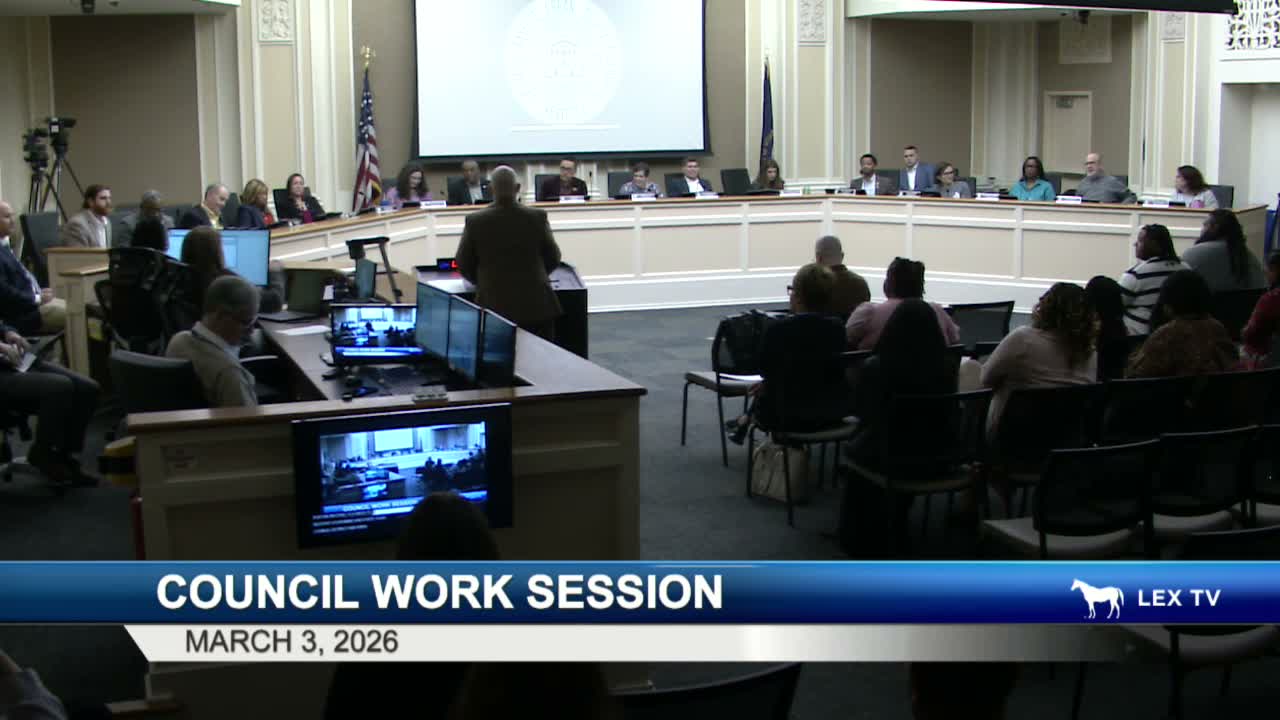
David Hill, a resident of the 10th District, told the Lexington Fayette Urban County Council on March 3 that he supports an updated parks master plan in principle but warned against rapidly awarding a new contract without ensuring the city has implemented prior plan recommendations.
“I’m not asking you not to pass this contract,” Hill said. “But I’m asking you not to be passive in the process … Get involved in the recreation part of parks and recreation.” Hill identified the proposed contract amount as $810,000 and asked that the Parks Trust Fund and its prioritized project list be integrated into any new master plan rather than kept separate.
Director Conrad told council members the contract before the body (item d) is with Perez Planning and will deliver the master plan in two parts: phases 1–2 focused on engagement, demographics, inventory and program review, and later phases addressing the funding structure and a prioritized project inventory. “Every 10 years, we’re required to produce a parks master plan in order to maintain accreditation,” she said, adding that the 2024 strategic plan will be integrated into the new master plan.
Councilmember Brown said she supports updating the plan and emphasized the need for community input to address perceived inequities in how park tax dollars have been invested across neighborhoods. Councilmembers asked clarifying questions about how voter‑approved park tax dollars and prior plans would interact with the new contract’s recommendations.
What’s next: the council approved a motion to take up new business at the session; discussion and the contract’s formal consideration remain on the council’s agenda for forthcoming procedural steps.