Get Full Government Meeting Transcripts, Videos, & Alerts Forever!
Get email alerts on the Community Violence Intervention topic
No spam. Unsubscribe anytime.
Save Our Streets program tells county it is reducing violence, outlines hospital-based outreach
Summary
Save Our Streets Montgomery presented its annual report March 17, telling commissioners the county-funded program has engaged high-risk residents, started hospital-based interventions and reported a stretch of 94 days without a shooting in one target neighborhood; the program asked for continued support and listed upcoming community outreach events.
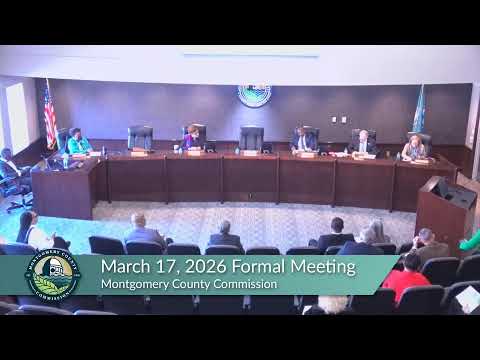
John Riley, program manager for Save Our Streets Montgomery, told the Montgomery County Commission on March 17 that county funding has allowed the community violence-intervention program to engage people at the highest risk of involvement in violence and to mediate conflicts before they escalate.
Riley said the program’s annual report, which he provided to commissioners during public comment, documents citywide outreach and cites a recent stretch of about 94 days without a shooting in one neighborhood the team targets. He described routine “drop the grill” events — free food and community canvassing — planned for March 18 and March 21 to bring services into neighborhoods rather than waiting for residents to come to them.
The report also notes that Save Our Streets has begun hospital-based interventions. When a commissioner asked whether the program had established relationships with hospitals and emergency departments, Riley said the effort is now under way and staff are engaging people in emergency rooms to mediate retaliation and link victims and at-risk individuals to wraparound services.
Yolanda Adams of Family Guidance Center introduced Riley and framed the presentation as the product of the county’s investment in a community-based approach. Riley thanked the commission for the donation that helped establish the program and asked for continued partnership as the initiative expands its outreach and hospital work.
The commission did not take any formal vote related to additional funding at the meeting. The program’s next steps, as stated by Riley, include continuing street-level canvassing and the newly started hospital-based interventions, plus the March outreach events listed in the report.