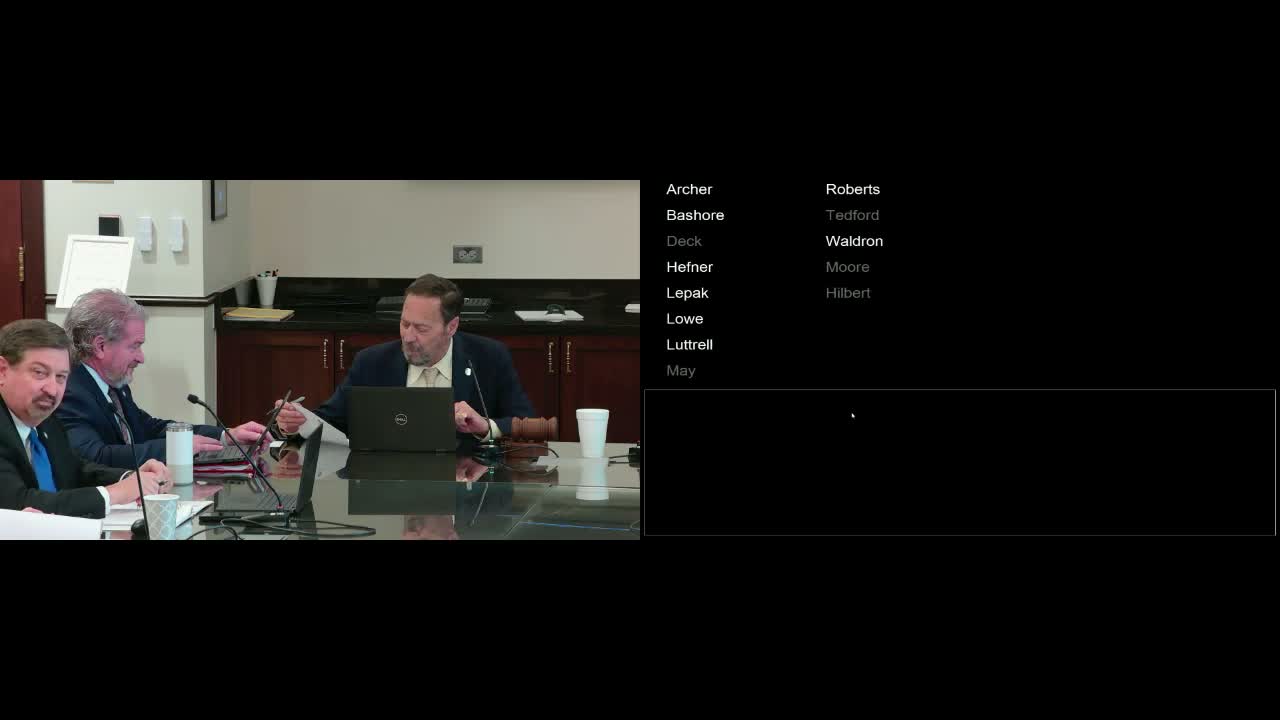
Committee backs bill to limit certain climate-related lawsuits; members debate impact on citizens' rights
Loading...
Summary
Pro Tem Moore's SB 1439 would bar certain state causes of action tied to greenhouse-gas emissions, a move sponsors say protects industry and critics say could curtail citizens' ability to seek remedies; the committee reported the bill due pass, 9-3.
Pro Tem Moore presented Senate Bill 1439 as an "Energy Security and Independence Act" that would prohibit certain causes of action arising from greenhouse-gas emissions and the alleged effects of climate change. "What this bill does is, prohibits causes of action for those who are doing things the right way," Moore said, urging adoption.
Several members pressed the sponsor about whether the bill would remove citizens' ability to sue and whether it might shield industry misconduct. "Why are we protecting a single industry and taking away the rights of citizens to..." Representative Walter asked, drawing an extended exchange that included an analogy to tobacco litigation and questions about standing and proof of damages.
Moore replied the bill addresses difficulties in naming all potential parties in climate suits and aims to prevent repeated, costly litigation he described as potentially frivolous. He acknowledged that similar suits are underway in other states and cited a case that originated in Boulder, Colorado, as an example. "They may eventually be, but I'm not going to subject any industry in Oklahoma... to frivolous lawsuits," Moore said.
Other members pressed technical and legal questions, including whether the bill would affect federal causes of action; Moore said it would not change federal law and that the legislature could repeal the statute if necessary.
Despite the objections and extended debate, the committee voted to report SB 1439 as due pass with a vote recorded as 9-3. The sponsor and opponents framed the issue as a balance between protecting major state industries and preserving pathways for legal redress; the transcript reflects disagreement about the analogy to earlier mass-tort cases and whether the bill could preclude meritorious claims.
The committee did not adopt floor amendments during this session; sponsors said further negotiation and potential amendments remain possible as the bill moves forward.