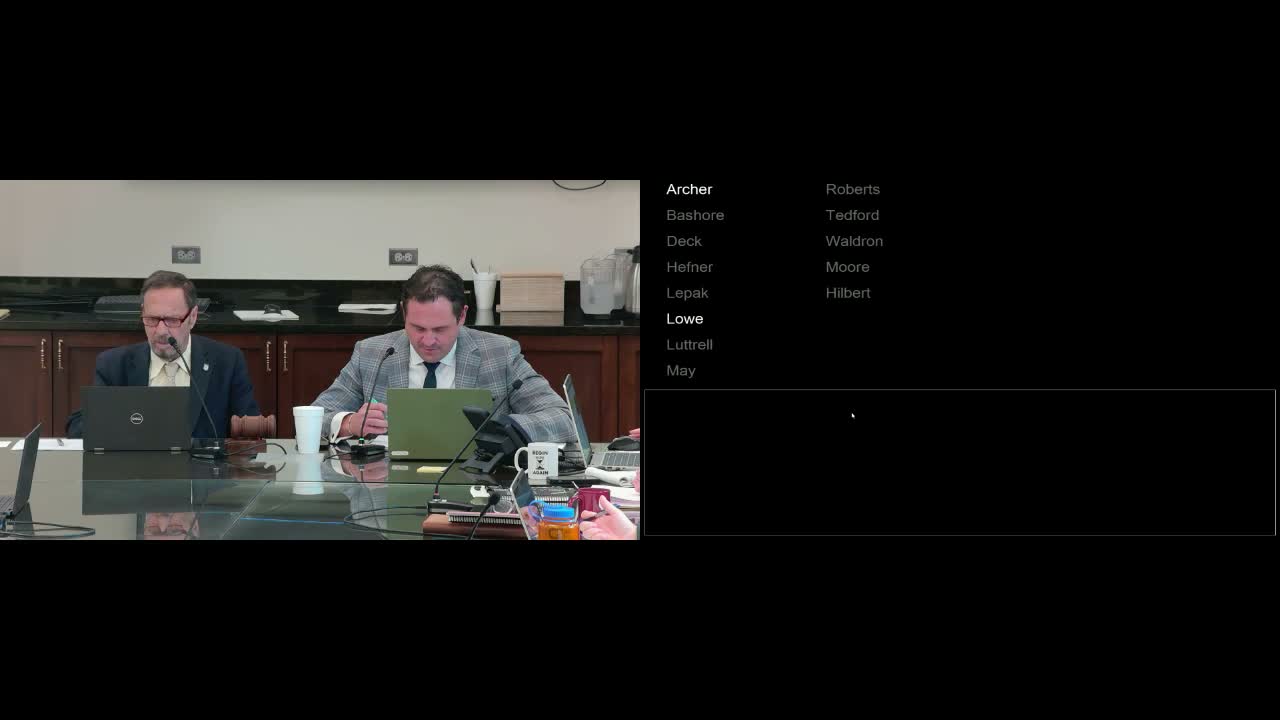
Committee advances a package of energy and environmental bills; multiple measures pass
Loading...
Summary
A legislative committee advanced a series of measures covering surety-bond phase-ins, higher fines for well drillers, repeal of an inactive low-carbon board, permitting transparency, and a development/resource-recovery bill; most measures passed unanimously with votes recorded.
A legislative committee advanced several largely uncontroversial bills on energy and environmental regulation and procedural housekeeping, approving them by unanimous or near-unanimous margins.
The committee reported Senate Bill 1976 (a mirror of House Bill 3469) due pass after the sponsor said it implements a three-year phase-in for new surety-bond requirements requested by the Oklahoma Energy Producers Association. "Senate Bill 1976 is a mirror bill of House Bill 3,469," the sponsor said, and the committee voted to report it due pass, 10-0.
Doc Newton presented SB 1314, which raises the maximum fine for well drillers to $25,000 and increases the related fund cap from $50,000 to $100,000 to cover remediation costs for wells that could contaminate aquifers. "We're increasing that up to $25,000 on a well," Newton said. The committee voted to report SB 1314 due pass, 10-0.
Deputy Bayshore explained SB 11191 would repeal the statute that created the Oklahoma Energy Low Carbon Initiative Board, noting the board never met and no members were appointed; the committee reported it due pass, 10-0. Representative Cornwell presented SB 1613 as a mirror of House Bill 3142 and said previous questions had been answered; it was reported due pass, 10-0.
Deputy Pfeiffer, representing the Department of Environmental Quality, described SB 1246 as a measure to speed agency services while increasing transparency by making information available online. In response to questions, Pfeiffer said the bill does not shorten the time for public comment and will make more material available online. The committee reported SB 1246 due pass, 11-0.
Finally, Representative Moore presented SB 1930 (a mirror of the House development act) and said negotiators were continuing discussions and that amendments were possible. He told members the bill included provisions to enable recovery of iodine and other constituents from oil-and-gas wastewater in some formations. The committee reported SB 1930 do pass, 11-0.
Votes and formal outcomes were recorded by committee staff for each item; most passed unanimously or with strong majorities. The committee adjourned after a brief scheduling note from the chair.
The committee did not take up or adopt major amendments to these measures during this session; several bills were described as mirrors of recently passed House measures.