Committee hears bill to extend property tax credit to parents after stillbirth
Loading...
Summary
Sen. Wallstreicher told the Ways and Means Committee that SB 356 would allow local property tax credits to cover families who experience stillbirths, citing financial hardship and urging counties to adopt the enabling measure; families attended and sponsors argued the credit would increase equity and discoverability compared with a grant.
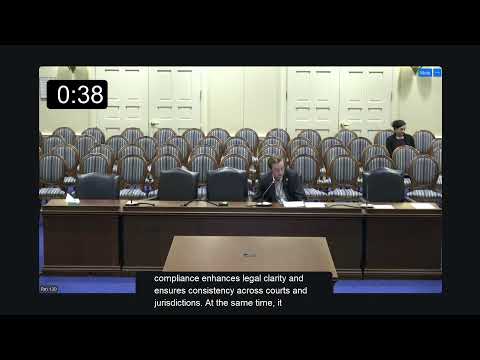
Senator Wallstreicher, sponsor of SB 356, told the House Ways and Means Committee on March 24 that the bill would allow counties to offer a property tax credit to parents who experience a stillbirth, arguing the change addresses unexpected burial costs and other financial burdens.
The sponsor said the measure is enabling — counties would choose whether to adopt the credit — and highlighted efforts to avoid unintended legal consequences tied to reproductive policy. "Giving birth to a stillborn child is one of the most traumatic things that a parent can go through," Wallstreicher said, pressing that Maryland’s tax code already provides relief in many comparable circumstances and that eight other states have adopted similar laws.
Advocates and witnesses described the financial strain on families. Daniel Fickas, past president of the Fraternal Order of Police in Baltimore City, noted the low average pension for many retirees and urged the committee to help surviving spouses retain their homes. Former Delegate John Cluster said prior fiscal estimates put statewide costs at roughly $428,000 and cited Montgomery County’s fiscal note of about $30,477 as evidence the impact is modest and county-level adoption preserves local control.
Committee members asked implementation questions. Delegate Hornberger flagged cases where insurers labeled stillbirths as a "termination of convenience," and asked whether the credit would help families cover funeral and burial expenses; the sponsor replied that the credit would provide relief for those costs. Vice Chair and other members pressed why the measure is a tax credit rather than a grant; Wallstreicher said advocates prefer a tax credit because tax preparers and software prompt users, increasing discoverability and equity for less-connected families. On refundability, the sponsor indicated the credit is intended to be available to families without a Maryland tax liability.
The chair noted the committee’s sponsor-only policy for bills already heard this session and invited written testimony and follow-up conversations from the families present. The committee did not take a vote at the hearing; sponsors asked for a favorable report and the bill will return as the process moves forward.