Committee considers adding 9-1-1 specialists to public-safety tax subtraction; retirement-age, IRS issues cited
Loading...
Summary
The committee heard on Senate Bill 148 to include 9-1-1 specialists in a public-safety subtraction modification; staff explained these workers tend to retire later than other public-safety personnel, and an IRS tax/plan-design issue could shape eligibility and fiscal impact.
Senate Bill 148 was presented to the Budget and Taxation Committee with staff explaining that the measure would add 9-1-1 specialists to a public-safety subtraction modification for tax/pension treatment.
A presenter (speaker 4) said that while many public-safety employees (corrections, law enforcement) have retirement ages around 55, 9-1-1 specialists typically remain in plans with later retirement ages—generally in the 62–65 range—and that adding them to public-safety provisions raises an IRS tax-question about plan design. The presenter said the change would increase the number of people eligible for related pension or subtraction modifications, though on the front end it would not produce the same scale of immediate increases as changes for traditional law-enforcement pensions.
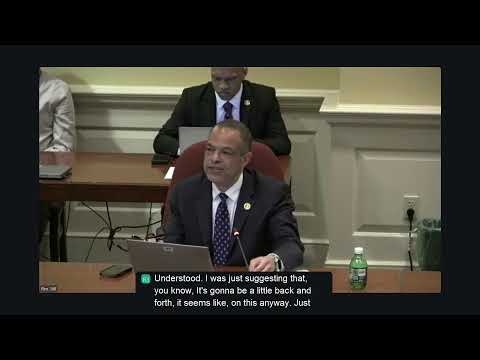
Committee members asked procedural and substantive questions. A motion was made and a voice vote was taken; the transcript records the motion and the chair calling the voice vote, but the transcript excerpt does not provide a full tally. Staff and members indicated this allocation has fiscal implications if more employees become eligible for related tax or pension benefits.
The committee moved on after taking the motion; the transcript does not show further action in the excerpt provided.