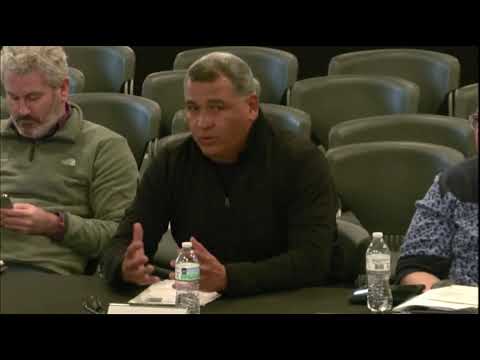
Advisory committee debates housing wording as consultants outline key strategies for draft comprehensive plan
Loading...
Summary
Committee members debated whether to frame the housing strategy as 'affordable/missing middle' or generalize to 'expand housing options'; consultants said strategies will be supported by specific action items and that prioritization and cost-buckets will follow.
The City of Joliet Comprehensive Plan Advisory Committee spent a substantial portion of its meeting examining the draft plan’s housing strategy language and sequencing for action and costing.
Leslie, the lead consultant, presented the draft plan outline and seven priorities, including a chapter on implementation that will contain roles, responsibilities and order‑of‑magnitude cost buckets. She said the plan will include visions and preliminary strategies for each priority and that the committee will later prioritize strategies and then refine actions and costing.
Several committee members pushed back on the phrasing of one housing strategy. One member recommended two alternative phrasings: generalize the strategy to “expand housing options to meet diverse needs and prevent displacement,” or keep the affordability language but ensure concrete actions address affordability and the so-called ‘missing middle.’ The exchange grew heated: a committee member said they were offended by a characterization that implied the city lacks affordable housing and interjected, “Shame on you,” during the back-and-forth. Another member argued the city needs rental and missing-middle housing to retain young professionals and allow workers (nurses, teachers) to stay in the city.
Consultants replied that if the committee generalizes the strategy statement they can place specific affordability and missing‑middle actions beneath that strategy so the topics are not omitted. The consultant also said ordering of strategies is arbitrary at this stage and that actions will be developed and costed later. A different member cited longer-term building‑permit data and rising median prices to underscore the need for a balanced housing approach across ownership, rentals and varied typologies.
The committee also flagged code enforcement and landlord accountability as priorities that carry implementation costs and suggested stronger proactive inspection policies for both rental and owner‑occupied properties. On process questions, consultants confirmed they will create actions under each strategy and later produce prioritization and rough cost buckets to inform budget discussions.
Next procedural steps announced at the meeting included continued committee review of the draft strategies, development of action items for chapter 7, and the Urban3 economic analysis presentation planned for the first week of June to provide parcel-level fiscal context for strategy prioritization.