Get Full Government Meeting Transcripts, Videos, & Alerts Forever!
Get email alerts on the Tax Increment Financing topic
No spam. Unsubscribe anytime.
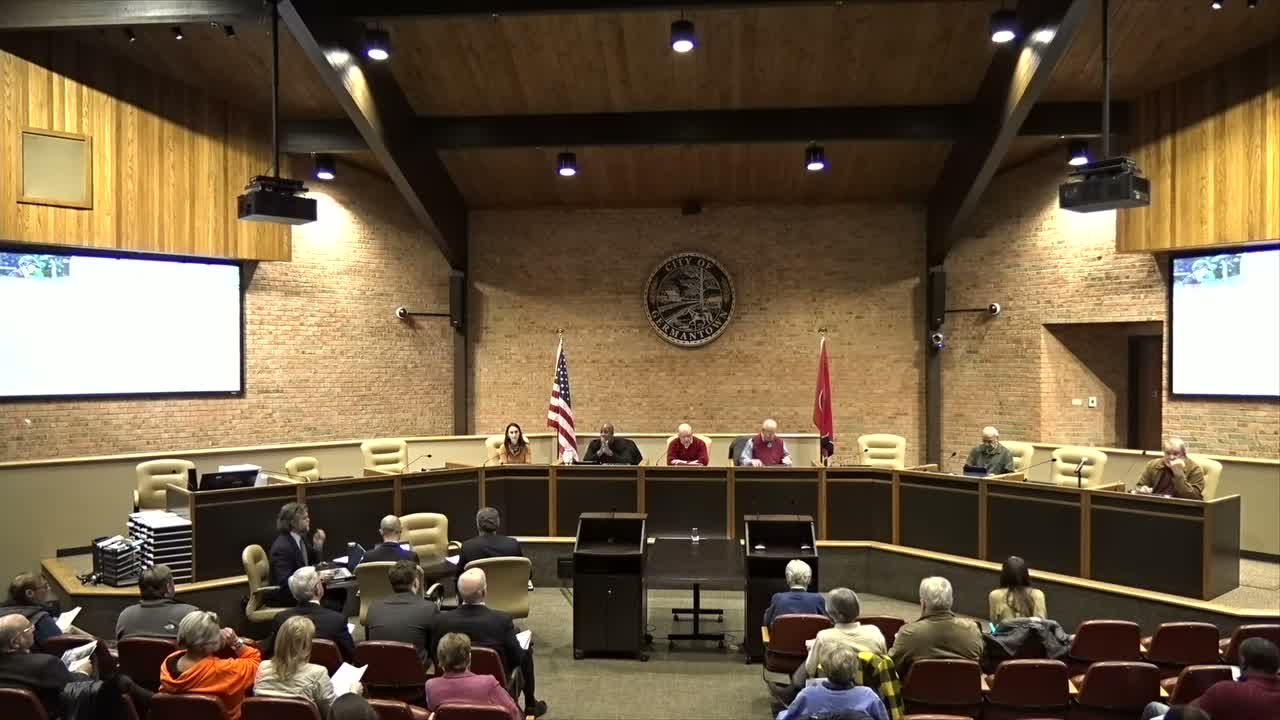
Germantown board hears developer pitch as residents oppose proposed TIF for Carefor Mall redevelopment
Summary
The Industrial Development Board heard presentations from city staff, the developer and an economic analyst about a proposed tax-increment financing plan for the former Carefor Mall. Speakers cited job and tax estimates while residents urged the board to deny the request; no vote was taken and the matter will return Jan. 29.
GERMANTOWN, Tenn. — The Germantown Industrial Development Board on Tuesday heard presentations on a tax-increment financing proposal for the Standard redevelopment of the former Carefor Mall, with the developer and the city outlining project costs and expected economic benefits while residents raised traffic, school and taxpayer‑cost concerns.
City development director Cameron Ross reviewed Germantown’s TIF policy, saying the program (in place since 2017) is designed to finance public infrastructure — transportation, utilities, site work and parking — with the increment (tax revenue above a frozen base year) used to reimburse eligible projects. Ross said the IDB makes recommendations but the Board of Mayor and Aldermen has final approval and noted applicants must submit a signed “but for” affidavit to show the project cannot proceed without TIF assistance.
Corey Van Blaercom of Younger Associates presented the economic-impact analysis for phases 1 and 2, saying the construction investment would be about $136 million and produce roughly $242.5 million in one‑time economic activity and support about 862 jobs during construction. He estimated an annual post‑completion economic impact of about $62 million supporting roughly 403 jobs and producing approximately $2.2 million in local taxes. Using 2025 assessed values, Van Blaercom said the city’s current property receipts for the parcels total $108,000; during the TIF period those receipts would rise to about $193,000 a year and ultimately to roughly $652,000 after the TIF ends. He described a 20‑year TIF in which 75% of increment could be designated to the TIF (with debt service and admin fees deducted first) and said the model yields about $22 million directed to the TIF over 20 years while the site would generate an estimated $51 million in local taxes during that period.
Michael Fane of MJF Consulting, representing CRE Devco Germantown LLC, described the phased master plan for lofts, retail and structured parking on the 10‑acre site, stressed the need to remove and replace 50‑year‑old infrastructure, and said public‑use parking will be included in the garages. Fane told the board, “this phase … has to be completely built, approved, permitted, open, done. And then we come back to you and ask for TIF funds then,” stressing that reimbursements would follow completion and appraisal of each phase. He also said the developer will pay a pro rata share of the sewer extension that serves the broader basin.
Several residents urged the board to deny the TIF. Lillian Landrigger, who said she owns a dental office across Kirby Parkway, told the board, “I’m here to ask you not to approve this TIF request,” warning that 320 apartments would create traffic, busing and neighborhood impacts and that her business will face construction disruptions. Patrick Green, a resident who called the proposal Germantown’s first TIF, argued the site is not blighted and said the developer already completed phase 1 with private capital; he called the request “a 14 and a half million dollar taxpayer money handout” and questioned whether the project meets the statutory “but for” test. Other commenters asked what enforcement measures or clawbacks would exist if the developer fails to meet commitments and criticized the timing of demolition without a fully funded plan.
The Industrial Development Board did not vote. Chairman Evans closed the public hearing and said the application will return to the board for consideration at a called meeting on Jan. 29 at 4 p.m., when board members may vote to forward a recommendation to the Board of Mayor and Aldermen or to deny the application. Public comment will again be accepted at that meeting.
The record presented to the board included references to the city’s TIF policy (including sections on eligible costs and the but‑for affidavit) and a resolution of intent passed earlier in 2025 to allow IDB review.