Get Full Government Meeting Transcripts, Videos, & Alerts Forever!
Get email alerts on the Economic Development topic
No spam. Unsubscribe anytime.
Kings Highway Jobs Corridor plan projects thousands of jobs and millions in local tax revenue, EDC tells Fort Pierce commission
Summary
EDC and planning consultants presented Phase 1 of the Kings Highway Jobs Corridor initiative, showing potential for industrial and mixed-use buildout with an economic impact analysis that projects roughly 21,000 direct jobs and significant municipal tax revenue; staff set a March 6 workshop to draft an optional overlay zone.
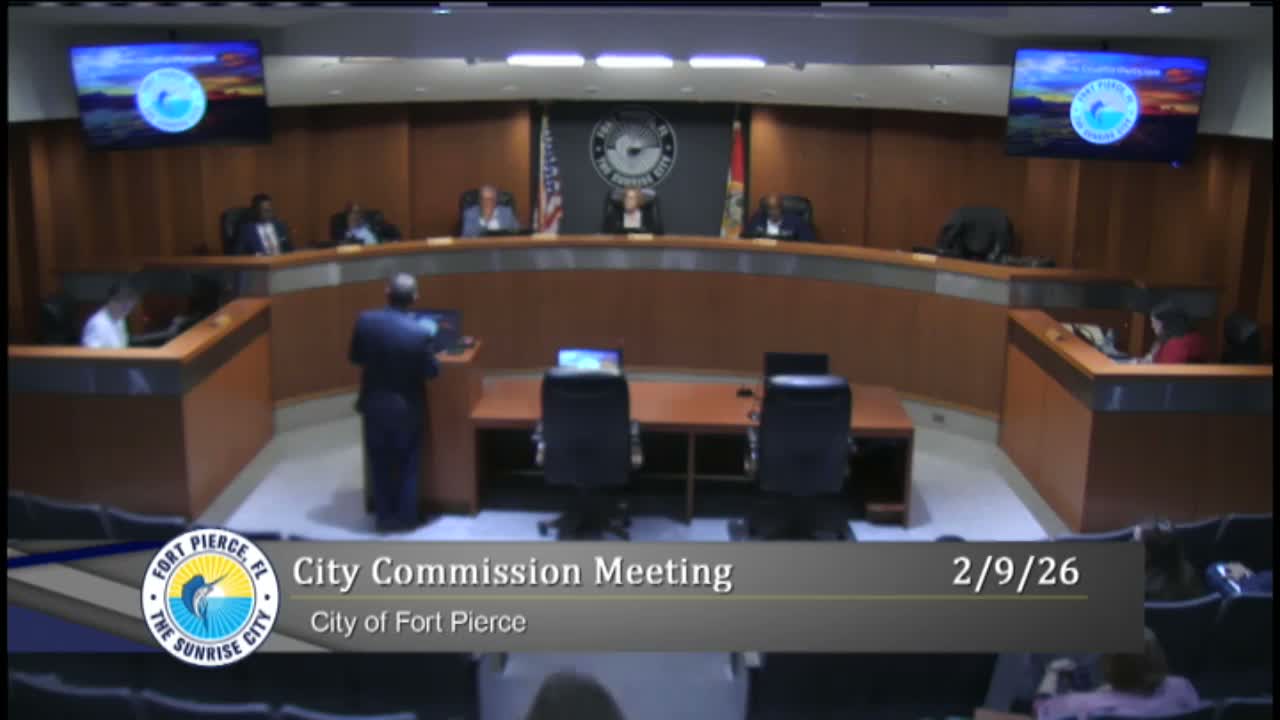
EDC officials and planning consultants told the Fort Pierce City Commission on Monday that the Kings Highway Jobs Corridor could become a major economic engine for the city if coordinated land‑use, infrastructure and design standards are adopted.
Leslie Olson of District Planning Group presented the Phase 1 final report and summarized an economic impact analysis that models buildout scenarios for the corridor. Olson said a scenario with roughly half of the study area as industrial use would yield about 4.7 million square feet of industrial space and, combined with commercial and office allocations, could generate an estimated 21,000 direct jobs and nearly $6 billion in total economic output across the county region. "That together would create 21,000 direct jobs, a total economic output of nearly $6,000,000,000, county tax revenues of $45,000,000, and municipal, i.e., Fort Pierce, tax revenues of $35,000,000 a year," Olson said in the presentation.
The consultants recommended an optional, unified overlay district the city and county could adopt in the corridor to provide consistent architectural and site design standards, faster predictable approvals and a three‑year pilot window so the approach can be evaluated. The EDC is scheduled to run a staff workshop on March 6 to draft overlay code elements and landscape standards that would allow developers to opt in administratively rather than undergo lengthy plan development processes.
EDC president Wes McCurry emphasized the region's competitive position: "Speed to market and predictable, high‑quality standards are what site selectors care about," he said, and the overlay is intended to reduce entitlement risk for employers seeking quick delivery.
Commissioners focused on practical constraints: power capacity, roadway access, interjurisdictional coordination and annexation authority. Commissioner Broderick and others asked what utilities and road upgrades (Orange, Graham, Okeechobee) would be required to support the projected demand and whether FPL and FPUA had committed to sufficient power. Olson and EDC staff said they are engaged with power-utility stakeholders and that phase 2 will refine infrastructure plans and identify funding and timing.
Several commissioners raised statutory and legislative risks, noting proposed state bills could limit annexation authority or shift permitting rules; staff and EDC said those issues will be part of policy discussions as the overlay code is developed.
Next steps: the EDC and city staff will hold a March 6 overlay‑code workshop; phase 2 will continue the economic impact analysis, coordinate with utilities (FPL, FPUA) and refine roadway and infrastructure planning to align public investments with private development potential.