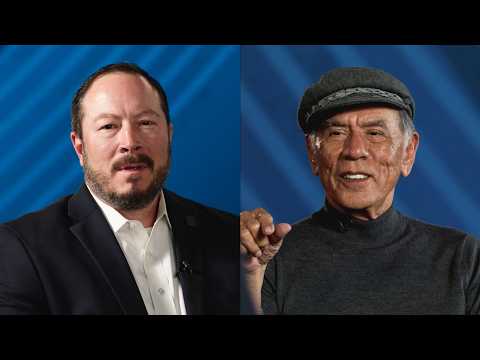
Wes Studi on Cherokee language, his Academy honor and Native representation in film
Loading...
Summary
Actor Wes Studi, in an interview with the Cherokee Nation's Deputy Principal Chief, reflected on growing up in Ophire (No Fire) Hollow, his reaction to receiving an Academy Honorary Award, the changing Cherokee language and the slow shifts in Hollywood's portrayal of Native people.
The Deputy Principal Chief of the Cherokee Nation welcomed actor Wes Studi to the program for a conversation about his upbringing, career and the state of Native representation in film.
Studi described his childhood: he was born in his grandmother's house in what he said is now called No Fire (Ophire) Hollow and recalled a subsistence life of gardens, hogs and hunting, and trips to the store at Tail Holt for staples. The memories, he said, shaped how he thinks about community and storytelling.
The host noted Studi's recognition by the Academy, and Studi said being honored for a body of work was humbling. "It felt good to be considered as well as awarded, even if it's called honorary," he said, calling the award a recognition of work done over "30 odd years or so." The host referenced 2019 as the year of the honor; Studi expressed surprise and gratitude that the Academy had recognized his career.
On language, Studi said he feels "somewhat responsible for being in my family just about the last one to be able to use the languages as much as I can." He observed that the Cherokee language is changing as more second-language speakers emerge, and he said younger people are increasingly embracing their identity and community.
Turning to the film industry, Studi said portrayals of Native Americans have followed cycles: in earlier eras "we were the bad guys in the way that had to be eradicated," he said, adding that periods of greater inclusion have returned and faded several times during his career. He credited increasing Native involvement behind the scenes — writers, producers and younger filmmakers — with helping shift what gets green-lit and how stories are told.
Asked what advice he would give to people who want to enter film, Studi said there is no single right moment: "You can get involved in film at any point in time that you feel like it's comfortable for you to do just that. Become involved in something that is bigger than yourself, something that will serve the future." He urged participation as a way to help future generations feel stronger about their place in society.
The host thanked Studi for sharing memories and thoughts on language and storytelling; the program concluded with Studi encouraging engagement in film as a means of cultural and community support.