Cleveland council questions plan to close Burke Lakefront Airport as administration seeks congressional route
Loading...
Summary
City officials outlined three closure options — waiting out grant obligations, seeking FAA approval, or asking Congress to order closure — and said they prefer a congressional directive; council members pressed for data on subsidies, tenant leases and effects on medical flights and the air show.
Cleveland transportation officials told a city council committee that closing Burke Lakefront Airport would require either waiting for federal and state grant obligations to expire, proving a "net benefit to aviation" to the Federal Aviation Administration, or asking Congress to direct the closure.
Mark Heckroth, the presenter for the study team, said the FAA’s review focuses narrowly on aviation: "The FAA's primary criterion when reviewing these things is a net benefit to aviation," he said, adding that economic or community benefits are not part of that calculation. He estimated the city’s remaining unexpired grant obligations at a little over $7 million and said federal grant obligations tied to the most recent capital projects would expire by 2034 and state obligations by 2039.
The administration described three closure paths. Option one would be to operate Burke until grant obligations run out — avoiding federal paybacks but requiring the port to maintain the airport for years. Option two would be to apply to the FAA now and complete a net-benefit demonstration and likely environmental reviews; the FAA could deny that request. Option three would be congressional legislation that could include explicit direction to the FAA and, depending on the bill language, forgiveness of some federal paybacks.
"The FAA is just not in the business of closing airports," an administration official said, explaining why staff are pursuing both an FAA path and a parallel congressional track. Officials said they plan to meet with FAA representatives later this month to discuss the reliever designation and other issues.
Council members pressed for operational detail. Administration staff said Burke recorded about 40,000 operations a year (counting flight training and helicopter activity) and that the airport operates at an estimated $1.7 million loss that has been subsidized by operations at Cleveland Hopkins rather than the general revenue fund. Council members repeatedly requested historical subsidy totals, a tenant inventory with square footage and lease payments, and documentation of the administration’s economic-impact assumptions for redevelopment.
Several council members raised concerns about medical transport and the annual air show. Officials said many medical flights are helicopter operations that could be staged at other nearby airports or Hopkins with ground transport, but that some fixed-wing medical traffic benefits from Burke’s location and runway. The administration said it has reached out repeatedly to the air-show organizers to explore transition options and hopes to preserve the event.
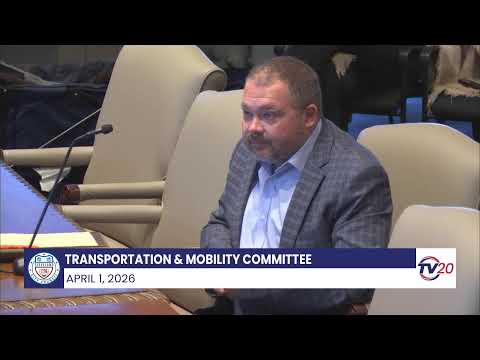
Public comment from airport users emphasized that grants are not loans and that airport operators have been reluctant to invest without long-term lease assurances. "A grant is not a loan," said Kyle Lewis of the Aircraft Owners and Pilots Association and the Lakefront Airport Preservation Partnership, urging council to hear airport users and technical experts on reliever status and reporting.
The committee scheduled a dedicated follow-up meeting for April 15 to review conceptual redevelopment plans and economic studies and to invite additional stakeholders, including aviation operators and air-show representatives. No formal vote or ordinance was introduced at the hearing.
Next steps: administration staff will meet with FAA officials and return to the committee with deeper analysis and concept plans on April 15; council members said they expect further hearings that include both proponents and opponents of closure.