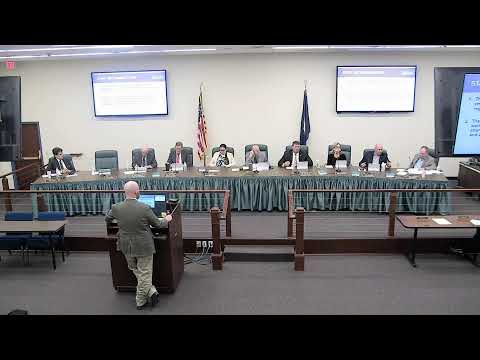
VMRC approves Chesterfield County pilot intake despite protest from local river group
Loading...
Summary
The commission approved a temporary Chesterfield County pilot intake and testing facility on the Appomattox River for up to three years after staff found VIMS, DCR and DEQ had no objections; the Appomattox Resilience Corridor protested, citing navigational, sediment and tribal concerns.
The Virginia Marine Resources Commission on March 31 approved a temporary pilot intake and small testing facility for Chesterfield County utilities after staff found no technical objections from VIMS, the Department of Conservation and Recreation or the Department of Environmental Quality.
Staff described the proposal as a temporary test facility involving three 3‑inch by 300‑foot polyethylene withdrawal pipes, a small submerged intake with 1 mm mesh and a 0.25 feet‑per‑second design velocity, and a buoy marking arrangement consistent with Coast Guard guidance. The pilot plant is intended to inform design for a future full‑scale 29,800,000 gpd intake previously permitted nearby.
Chesterfield Director of Utilities Matt Rembold (speaker 21) said the pilot intake will produce data to optimize treatment processes and emphasized built‑in protections for fisheries, including the low intake velocity and mesh screen. "We believe we are doing everything to the best of our ability to be protective and respectful of the state's resources," he told commissioners.
Opposition came from Kyle Ashley of the Appomattox Resilience Corridor, who argued the intake sits too close to the federal navigation prism and urged a 60‑day deferral for a broader navigational and hydraulic restoration study. Ashley raised concerns about foundation stability, entrainment and impacts to ancestral waters and fish passage.
Staff said ARC’s initial protest was largely about broader channel maintenance by the Army Corps and outside VMRC’s jurisdiction, and noted that VIMS and DCR reviewed the application and offered timing or operational recommendations (for example, timing of pile installation to protect anadromous fish). After questions from commissioners about proximity to federal channel navigation, Coast Guard marking, and whether the pilot was upstream of salinity lines, the commission voted to approve the temporary intake as recommended by staff.
The approval authorizes the pilot testing program to operate up to three years, with monitoring and monthly withdrawal reporting to DEQ as required. Commissioners said the vote balanced local water‑supply planning needs with the conditions and monitoring required by staff and other agencies.