Get Full Government Meeting Transcripts, Videos, & Alerts Forever!
Get email alerts on the Food Service topic
No spam. Unsubscribe anytime.
Franklin highlights food-service overhaul, local sourcing and nearly $1 million in kitchen upgrades
Summary
District food-service leaders showcased scratch-made menus, a new executive chef, local purchasing and sustainability measures; they said the self-funded revolving account enabled more than $960,000 in equipment upgrades and expanded student engagement.
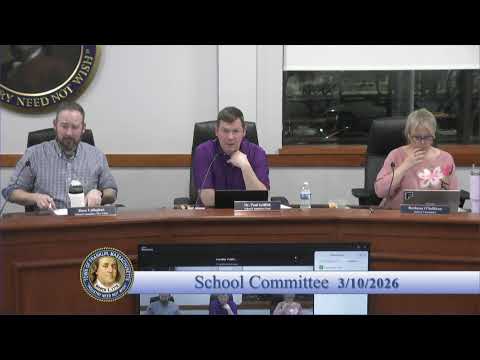
Colin and Aaron, the Franklin Public Schools food-service team, told the school committee that the district has moved toward more scratch-cooked meals, greater local sourcing and sustainability measures while operating on a self-funded revolving account that supports operations and capital reinvestment. "We administer the National School Lunch and Breakfast Program," Colin said, noting universal free lunches in Massachusetts have increased participation and revenue that the program is reinvesting in equipment and staffing.
The presentation included a tasting station and a description of new menu items and processes: house-made chicken and soups, fresh meatballs, a pasta bolognese, and a rotating set of Friday "food bars" such as pasta, stir-fry and a baked-potato bar. Aaron described local procurement efforts and said local purchases are being tracked for the first time this year; he reported roughly 18 percent of purchases were sourced within New England, about $83,000.
The presenters described several investments made from the food-service revolving account over the last three years: replacement of walk-in coolers and freezers, new dishwashers and serving-line equipment, and combi ovens at multiple schools. "Over the last 3 years, the food service department has invested just over $960,000 in kitchen facility equipment upgrades," Colin said. The team said those investments reduce reliance on capital requests for routine equipment replacement and can produce energy and operational savings.
Sustainability measures include a grant-supported shift to reusable metal trays (the department expects a payback within about a year and a 10+ year useful life) and a composting partnership with Agricycle; the contractor diverts food waste to an anaerobic digester that produces electricity and fertilizer. Presenters emphasized the educational value of composting and experiential events—from a corn-shucking day to a local "fish bake"—that connect students to food sources.
Staffing and program details were also discussed: the district hires an executive chef (supported this year by a $10,000 grant from the Kendall Foundation) to centralize complex scratch cooking for distribution across schools; catering and contracted services bring in roughly $50,000 a year and summer/partner programs add about $80,000 a year; the department employs roughly 45 staff. Colin said managers keep production records and use those to limit waste and plan volumes.
Committee members praised the program for student engagement, thoughtful menu design and financial stewardship. Members asked about allergens and food safety; Colin said staff receive annual food-safety and allergen training and managers hold additional certifications and that accommodations are made case-by-case to avoid cross-contact. The presentation closed with an invitation to view short videos documenting kitchen operations and student activities.
The next procedural step: the presentation concluded and the committee moved on to the business agenda. The presentation’s provenance in the meeting record starts with the committee’s invitation to the food-service team (SEG 576) and continues through presenters’ closing remarks (SEG 2342).