Lifetime Citizen Portal Access — AI Briefings, Alerts & Unlimited Follows
Rosemount council adopts 2026 street‑improvement assessment covering 214 parcels
Loading...
Summary
After an engineer’s presentation and a public hearing with no public testimony, the council adopted the assessment roll for the 2026 street‑improvement project (Project 2026‑01); the 10‑year single‑family parcel assessment averages just under $2,300 per parcel and the resolution passed 4–0 by roll call.
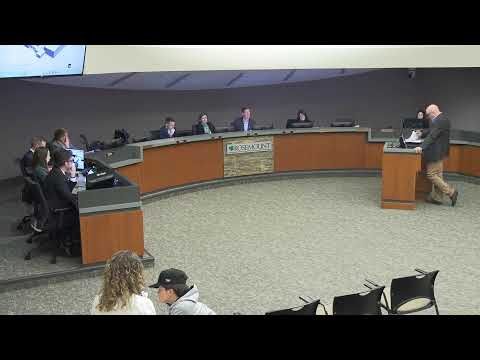
The Rosemount City Council on March adopted a resolution approving the assessment roll for the city’s 2026 street‑improvement project (Project 2026‑01), after city engineer Brian Erickson presented project details and opened a statutorily required assessment hearing.
Erickson told the council the project covers streets between Shannon Parkway and Chippendale Avenue, just north of County Road 46, with pavement reclamation, curb and gutter, ADA sidewalk improvements and minor utility work. He said alternate items (repaving a lift‑station parking area and repaving a trail through DC Park) are part of the project but not included in assessment calculations.
Erickson said the project came in under prior estimates; the low bid reduced the assessment portion to just under $500,000 and the 10‑year assessment for a single‑family parcel—214 parcels in the project—works out to about $2,300 per parcel, down from an earlier estimate of $3,000–$4,000.
The council opened the public hearing, heard no speakers, closed the hearing and a motion to adopt the assessment roll was approved by roll call, 4–0. The roll call in the record shows votes recorded as: Klimpel — Aye; Tyson — Aye; Ruskie — Aye; Esler — Aye. The resolution authorizes the assessment as presented and notes assessment deferral options exist for qualifying property owners.
Why it matters: property owners in the project area will see an assessed portion of the project cost spread over 10 years; Erickson emphasized that utilities cover the utility work and that the city pays 65% of the surface improvements. Property owners have statutory rights to submit written objections at or before the hearing and to pursue challenges under state statute.
Next steps: the city will post the project presentation and the engineer’s report on the city website and proceed with scheduling and construction per the approved budget and bid.