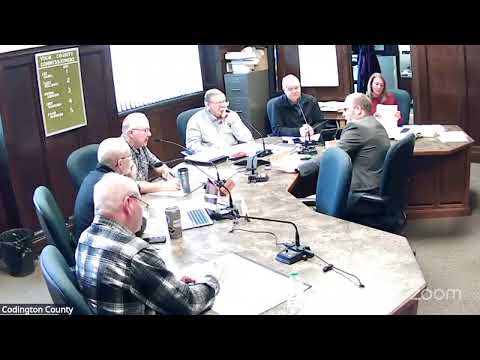
Sen. Glenn Vilhauer briefs Codington County on property-tax relief, rural infrastructure funding
Loading...
Summary
Sen. Glenn Vilhauer told Codington County commissioners that the Legislature passed bills creating a $5 million rural access infrastructure fund and options for county sales-tax–funded property-tax relief, and warned of administration and distribution issues to watch.
Sen. Glenn Vilhauer, R‑District 5, updated the Codington County Board of Commissioners on the just‑concluded legislative session and highlighted measures that may affect county budgets and taxpayers.
Vilhauer said the Legislature allocated $5 million in a rural access infrastructure program (Senate Bill 240) intended to help counties and townships pay for road and infrastructure projects. “There was $5,000,000 allocated…for counties and townships,” Vilhauer said, and an emergency clause was added so the money is available immediately, though he cautioned the counties will need to watch how the program is administered.
He also reviewed two related measures affecting property‑tax relief. Senate Bill 96 gives counties the option to implement an additional one‑half percent sales tax to fund property‑tax relief. Vilhauer said the Bureau of Finance and Management provided county‑level estimates showing the option could reduce owner‑occupied property taxes in some counties by as much as 22 percent if fully implemented.
A separate measure, identified in the update as Senate Bill 245, would change the sales‑tax rate structure when a temporary increase sunsets and designate roughly 0.3 percentage points of sales tax revenue for property‑tax relief; Vilhauer estimated that change could produce about $110 million statewide. He said the Legislature seeded the new property‑tax replacement fund with “just under $56 million” from general reserves to kick‑start the program but said he opposed the bill because of concerns about dedicating recurring revenue and turning administration over to the Department of Revenue.
Commissioners asked several clarifying questions about eligibility and local administration for the rural infrastructure dollars. Vilhauer said the new program largely refers back to the eligibility criteria used in the 2021 iteration and noted that townships have options—such as establishing a road levy at their annual meeting—to meet eligibility requirements.
Vilhauer framed the bills as a significant change in how the state may provide property‑tax relief and urged county officials to review bill text and implementation details on the Legislative Research Council website. The update concluded with brief discussion about other bills the senator followed and an offer to answer follow‑up questions by phone or email.
The board took no formal action on the legislative items during the meeting; the session continued to routine county business.