Get Full Government Meeting Transcripts, Videos, & Alerts Forever!
Get email alerts on the Animal Welfare And Zoning topic
No spam. Unsubscribe anytime.
Henderson council withdraws animal-code package after residents object to livestock caps
Summary
After hours of public comment from ranchers, petting-zoo operators and neighbors, Henderson councilors directed staff to withdraw proposed Title 7 and Title 19 animal-code amendments to revisit livestock limits, camelid classification and a possible new 'petting-zoo' use category.
HENDERSON — City councilors on April 1 declined to move forward immediately with a broad package of animal-welfare and zoning changes, instead directing staff to withdraw the ordinances and return after further work following extensive public comment.
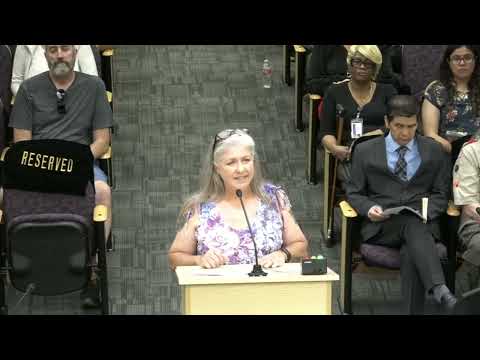
Hundreds of residents, ranchers and animal-business operators filled the committee meeting’s first public-comment period to oppose a proposed flat limit that would cap some livestock at 10 animals per parcel and to press staff to clarify species definitions and permit rules. "I respectfully urge the council to grandfather in existing livestock owners who have built their lives, homes, and family around this lifestyle," said Shay Stewart, who opposed a hard cap and urged retaining per-area ratios for large properties.
The staff-drafted package would move many animal-related standards from Title 19 into a revised Title 7 and add welfare provisions — including explicit shelter and heat-protection requirements — and new rules for mobile-animal businesses. The city’s animal-control administrator told council the measures are intended to prevent heat-related deaths and provide clearer enforcement tools; Hearts Alive Village executive director Christy Stevens urged the council to adopt stronger protections, saying, "When an animal dies of heat stroke, it's ... excruciating." (Stevens is the executive director of Hearts Alive Village.)
But several commenters said the changes as drafted would disrupt established livelihoods and cultural practices. Nancy Rojas, who operates a mobile petting-zoo business and said she has kept camels in Henderson for 12 years, told the committee the draft code’s head-count approach would make her business infeasible: "I care for a flock of over 50 white homing pigeons ... this title would make this work impossible for me," she said.
Council members raised two recurring concerns: how a "parcel" is defined across lot sizes and whether rural-preservation areas or established animal establishments should be treated differently. Staff responded that the draft already uses area-based ratios for many large animals (for example, 1 horse per 10,000 square feet and 1 cow per 40,000 square feet) and that conditional-use permits and animal-establishment permits can allow higher counts for commercial operations. Still, members said the integrated nature of the two ordinances made surgical edits difficult on the meeting's timetable.
Council discussion shifted from debating individual numeric limits to process: several members asked staff to create a new use category (for example, a defined 'petting zoo' or similar commercial/residential hybrid), to work with operators and neighbors, and to return with clearer, targeted language. "If we open up the code too much just to address this one unique situation, I think it's going to cause a problem for other people in Henderson," a council member said, while others urged more time to draft exemptions for rural parcels.
City staff recommended that drafting a new use category and researching the impacts could take two to three months, though they said some noncontroversial code sections could be reintroduced sooner. The council ultimately instructed staff to withdraw Items 8 and 9 from the committee agenda (and related items from the regular meeting) and to work with neighbors and animal-care operators to draft revisions.
The direction means the animal-welfare and development-code updates will not advance to a final vote at this time. Staff said they will engage with affected residents and return with revised language and options for council consideration.
The committee continued with other business after the withdrawal direction and adjourned its portion of the meeting before the regular council session began.