Get Full Government Meeting Transcripts, Videos, & Alerts Forever!
Get email alerts on the Special Education topic
No spam. Unsubscribe anytime.
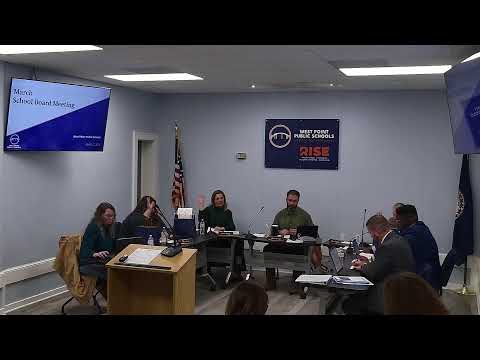
Parent criticizes special-education budget as board reviews annual plan
Summary
A West Point parent urged the school board to increase special-education funding, calling the current allocation 'unacceptable.' Board staff presented the annual special-education plan describing federal Part B allocations, staffing funded by state allotments and a proposal to create a small specialized program for four elementary students.
A West Point parent told the school board the district’s special-education budget “is unacceptable,” urging the board to invest more in services so students can remain in the district’s schools.
“My son…has special needs. Quite frankly, it’s unacceptable,” Mike Snyder said during the public-comment period, identifying himself and asking the board to “invest in them” so West Point remains a community for every child.
The board then reviewed its special-education annual plan. Miss Roach said the plan relies on state allotments for school-age programs (Part B 611) and preschool (619), and that the division’s school-age allocation funds partial salaries and benefits for three special-education teachers and one paraprofessional — an amount she described as approximately $187,000 received from the state.
Roach also described the preschool allotment used for a portion of an early childhood special-education teacher’s salary and roughly $600 for instructional materials. She said the division was not required to set aside funds for homeschooled or private-school students this year and that it had no compliance flags in its previous indicator submissions.
Board members and staff discussed plans to develop a specialized program for students with intensive needs. Roach said the program currently under discussion would serve about four elementary-age students, would require a dedicated space, a teacher and likely two interventionists, plus classroom materials and assistive technology. She said the program would be designed so students receive specially designed instruction while still participating with peers for specials and recess.
Roach also noted ongoing outreach for community screening events and an upcoming parent training session from the Parent Educational Advocacy Training Center (PEATC) on May 5 at the West Point Library.
The board did not take a final vote on a funding increase at the meeting; members moved later in the agenda to approve the annual budget revisions and other routine action items.
What’s next: The special-education annual plan remains before the board as part of the budget process; staff said any required amendments will be made when state 2026–27 allocation numbers are released.