Get Full Government Meeting Transcripts, Videos, & Alerts Forever!
Get email alerts on the Expense Reimbursement Policy topic
No spam. Unsubscribe anytime.
Committee approves revised expense‑reimbursement policy, sets 300‑mile airfare guideline
Summary
The Education Technology and Policy Committee approved changes to Policy File D‑7.3 that reorganize travel categories, generally favor airfare over mileage for out‑of‑state trips beyond 300 miles, clarify documentation and allow Airbnb stays when more economical; the motion passed without recorded opposition.
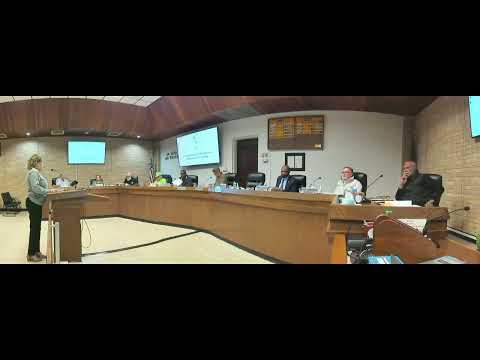
The Education Technology and Policy Committee approved a revision to Policy File D‑7.3 on expense reimbursement after staff described reorganized travel rules and new cost‑control measures.
Ms. Breaux, a district staff member who presented the item, said the revision creates three distinct travel categories — in‑parish, out‑of‑parish and out‑of‑state — and “for out‑of‑state travel … flying instead of driving is going to be required if you’re traveling out of state over 300 miles because, generally it’s going to be less expensive than the mileage.” She said the policy clarifies required documentation for taxis and rideshare and adds an exception for employees with medical documentation.
The committee also discussed lodging rules. Ms. Breaux asked to add language permitting Airbnb stays "if it’s more economical than staying in a hotel room," and said that the district will reimburse the cheaper option. The committee chair noted, “we’re not requiring you to fly. We’re just going to reimburse you at the cheaper rate. You can do whatever you want. You can stay in Airbnb if you want, but we’re not going to reimburse you for the more expensive rate.”
Members asked how the rules apply to parochial‑system employees and to pre‑paid conference costs. Staff said the policy covers parochial partners when they travel on federal funds that pass through the district and that employees are expected to attempt refunds for cancelled travel; nonrefundable expenses must generally be reimbursed to the appropriate fund unless there are extenuating circumstances such as illness or bereavement.
Staff told the committee the district will continue to use the IRS standard mileage rate for mileage reimbursements and may consider alternative rate structures as a future option. After discussion, the committee moved and approved the recommendation that the board adopt the revised Policy File D‑7.3; the motion passed when the chair called for opposition and none was noted.
The policy change will proceed to the full board for the next steps on the board calendar.