Lifetime Citizen Portal Access — AI Briefings, Alerts & Unlimited Follows
Board approves updates to waste, C&D and bear‑proof ordinances and orders stronger vendor enforcement
Loading...
Summary
Supervisors gave conceptual approval to amend solid‑waste, construction/demolition recycling and bear‑proof container ordinances and directed staff to pursue mandatory collection options in parts of Tahoe and stronger enforcement and registration steps against unpermitted roadside food vendors.
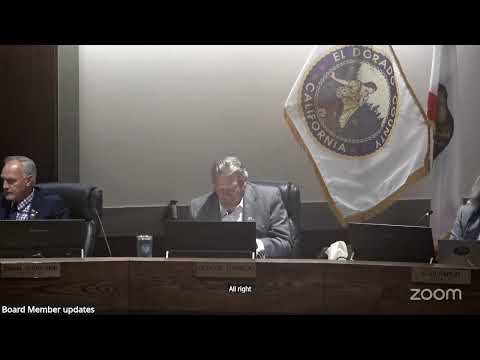
The El Dorado County Board of Supervisors on March 24 approved conceptual updates to multiple environmental ordinances and ordered a tougher, coordinated approach to unpermitted roadside food vendors.
Environmental Management staff asked the board to modernize three longstanding ordinances: the bear‑proof waste and recycling rules (to standardize storage requirements and apply modern systems), the construction and demolition (C&D) recycling ordinance (to simplify compliance and align with state law), and the solid‑waste management code (last comprehensively revised in 1997). For the Tahoe basin, staff recommended evaluating mandatory collection in Tahoma and Meeks Bay to reduce illegal dumping and stabilize rates; Tahoe Truckee Sanitation District indicated it would forego 2025–26 rate increases to help smooth an expanded service transition.
The board gave conceptual approval to the ordinance changes 5–0 and directed staff to return with recommended revisions and options for standardizing requirements across collection systems.
Separately, Environmental Management reported a sharp rise in unpermitted mobile and roadside food vendors, including cooks operating improvised grills and kitchen equipment at roadside pullouts. Staff documented food‑safety risks (raw meat near cooked food, lack of hand washing and refrigeration), traffic and fire hazards, and lost permit and sales‑tax revenue. The department has convened a multi‑agency task force, developed a universal inspection form and an online complaint portal, and coordinated enforcement actions with the sheriff’s office and local code enforcement. Staff asked for conceptual authority to strengthen permitting language in the county health permit ordinance and to work with law enforcement and tax authorities on penalties and registration.
The board voted 5–0 to authorize staff to pursue ordinance changes and to return with an enforcement plan that includes interagency coordination, public education and options (including impoundment and administrative fines) intended to discourage unpermitted vendors and reduce public‑health risks.
What’s next: Environmental Management will draft ordinance language, scope mandatory‑collection options for Tahoe franchise areas, finish the complaint portal and return with implementation and budget estimates. The board also asked staff to coordinate public education and PIO messaging to explain health and traffic risks to residents and visitors.