Panama City commission confronts $4.5 million FY2027 shortfall; staff asked to model deep cuts and revenue options
Loading...
Summary
City staff told commissioners the FY2027 general fund could be $4.5 million short under conservative revenue estimates; officials asked staff to model 10–16% operational cuts, targeted user fees and merchant‑fee changes while delaying any final vote until a follow‑up workshop.
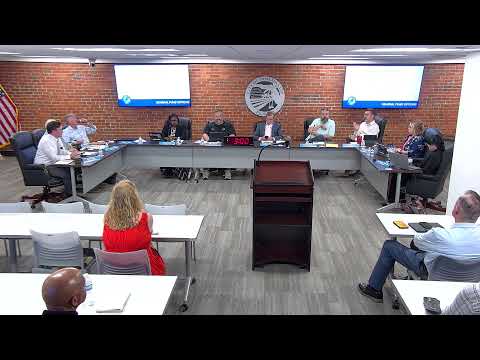
City of Panama City officials on March 30 opened a pre‑budget workshop where staff warned that preliminary projections for fiscal year 2027 show a roughly $4.5 million shortfall in the general fund and outlined a menu of fixes including tax changes, merchant‑fee cap adjustments and personnel or operating reductions. Mayor Branch called the meeting to order and staff presented high‑level budget assumptions and staffing breakdowns.
The presentation said staff used FY26 revenues with conservative adjustments and estimated general fund revenues could be about 5% lower in FY27, producing a $4,500,000 gap unless revenue is raised or expenses reduced. "This is very early in the process," a staff presenter said, noting the Bay County property appraiser and the Florida Office of Economic & Demographic Research will release more formal estimates later in the summer.
Staff offered concrete options to close the gap: a 1.125‑mill increase (roughly $4 million per mill), combinations of a smaller millage increase plus personnel/operating reductions (example: a 0.5 mill increase plus $2.5 million in cuts), raising the merchant‑fee cap (staff estimated raising the cap to $20,000, $30,000 or $40,000 would bring roughly $3.1M, $4.6M or $6.2M respectively in additional revenue in staff scenarios), or absorbing the shortfall entirely through operating and personnel reductions.
Commissioners pressed staff for options that would let them see the effects on services and jobs rather than hypotheticals. One commissioner urged staff to run a governor‑style "10% exercise" for operational budgets so elected officials can review what would change; staff explained that when debt service and restricted revenues are removed, the operational cuts needed to close the gap average closer to 16% in staff calculations.
Several commissioners said they preferred a balanced approach. Some supported expanding user fees (for example, boat‑ramp fees or paid parking for nonresidents) and broadening the merchant‑fee base rather than immediately raising millage. Others said they would not vote to increase the millage and emphasized the political and community consequences of taxing residents for services. Commissioners repeatedly asked departments to return with both "wish lists" (unconstrained priorities) and concrete cut packages so elected officials can weigh trade‑offs.
Staff confirmed the FY27 baseline includes step increases and a 2% COLA and that departmental requests have not yet been submitted; staff asked for direction and said it would return in about a month with more detailed scenarios. The commission did not take any final votes on tax rates or personnel reductions at the workshop.
Next steps: staff will run targeted scenarios (including 10% and staff‑estimated 16% operational cuts), model revenue options presented tonight and return with a follow‑up workshop and more concrete cost/benefit comparisons ahead of the budget adoption process.