Knox County ethics subcommittee reopens code review; debates lobbying ban, disclosure rules and nepotism
Loading...
Summary
The Knox County ethics subcommittee voted to reopen review of the county code of ethics and debated whether to extend a one-year post-office lobbying ban, where disclosure forms should be filed, and whether the definition of "personal interest" should cover nepotism and intimate relationships. Staff were asked to research legal and NACO guidance.
The Knox County ethics subcommittee voted to reopen the draft county code of ethics for further review and assigned staff to research legal and comparative guidance for several contested provisions.
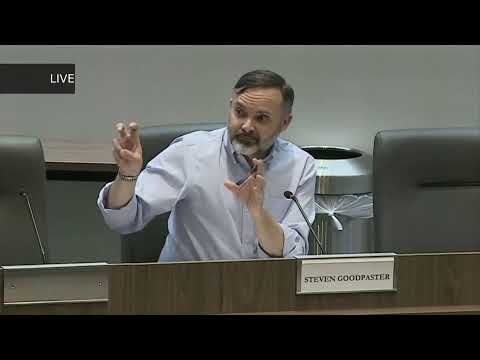
At the meeting, members moved and passed a motion to reopen the policy discussion so the committee could review language the county commission had forwarded. Miss Gibson moved to reopen the policy; Mister Goodpastor seconded the motion and the committee approved it.
Mister Kennedy read the draft provision that would bar a person who has been elected to a county office from representing another person or entity for compensation before the governing body for a period of one year after vacating that office. "A person who's been elected to any county office may not personally represent another person or entity for compensation before the governing body of which that person was an officer for a period of 1 year after vacating that office," he read.
Members debated whether that cooling-off period should remain one year or be extended to two years to align with a recommendation from the county commission and the National Association of Counties (NACO). Mister Sanders said the law department should review the provision’s legality and any licensure implications before the committee makes a final recommendation. "I can look into legality of that provision," he said, urging a focused request of the law department on whether there are legal requirements for a specific cooling-off period.
The subcommittee also reviewed travel and expense language and agreed some items (including per diem rates) fall under Knox County Finance's expense policy rather than the ethics code and should be handled by the county’s expense-policy owners.
On disclosure practices, the group discussed moving a conflict-of-interest disclosure form into Attachment A of the draft and whether completed forms should be read into the committee's public record or filed with the county clerk or in personnel files. Several members expressed concern about confidentiality and the risk that complaints could be filed close to elections. Mister Sanders cautioned the committee not to create contradictions with existing code text about where disclosures are filed.
The chair, Debbie Stafford, urged broadening the draft’s definition of "personal interest" beyond strictly financial matters to include nepotism or other intimate relationships. "Personal interest shouldn't be just financial," she said, arguing citizens often raise nepotism and favoritism concerns. Other members warned that ethics codes traditionally focus on financial conflicts and that personnel or employment matters often belong in human-resources policy rather than an ethics code. Mister Sanders cited a Tennessee statute indicating ethical standards "do not include personnel or employment policies," and recommended the committee watch for statutory constraints.
The committee also agreed to strengthen whistleblower protections, add a link to the fraud hotline and internal audit, and require annual training tied to the reorganization meeting. Members asked Mister Sanders and Miss Gibson to research NACO guidance, licensure issues, and whether specific text should require annual filings with the county clerk.
Next steps: staff and the law department were asked to research the legality and comparative practice on the cooling-off period and to clarify where and how disclosure forms should be filed. The subcommittee adjourned without taking a final vote on substantive code changes.