Kenai council reviews options to fix or relocate public safety facilities, with costs ranging from $4M to $30M
Loading...
Summary
Architects presented four concepts for Kenai's public safety facilities: heavy renovation of the 1973 building (up to about $19.5M), lighter retrofit (~$4M), renovating the Challenger Learning Center for police or fire (roughly $7.8M'$10.8M), or building new (about $30M). Council asked for site assessments and timeline estimates.
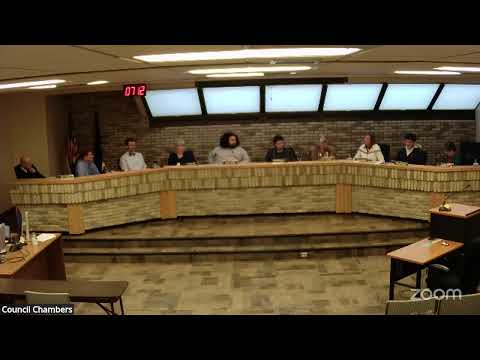
KNA Design Studios principal architect Chris Parker told the Kenai City Council on April 1 that the city has multiple order-of-magnitude options for its aging public safety facilities, with costs and operational trade-offs that will shape any next steps. "The facility was built in '73," Parker said, noting widespread systems failures and asbestos that drive renovation costs.
The options Parker outlined included: an intensive renovation of the existing fire and police station (estimated around $19.5 million for a full remodel that could include partial demolition); a lighter retrofit to use the old building for non-apparatus office functions (roughly $4.0 million); selective renovation and additions to the Challenger Learning Center to house police or fire functions (estimates of about $7.8 million to $10.8 million depending on add-ons); or relocating both emergency services to an expanded Challenger site (about $18.0 million). Parker also said a completely new, combined facility was considered and would be the most expensive option, at roughly $30 million.
Acting City Manager Frey told council the cost drivers are largely related to hazardous-material abatement and aging mechanical systems. "Because of having asbestos in it, the building's older," Frey said through the presentation, adding that renovating the older structure would require extensive demolition and rework. Frey and Parker both stressed these were conceptual, order-of-magnitude figures that would be refined by detailed site assessments and design.
Council members pressed on cost drivers, phasing impacts and service continuity. "Is it just because of the asbestos, or what is that big cost driver?" Councilmember Daniel asked; Parker replied that asbestos, outdated plumbing and HVAC replacement make a full renovation essentially a demo-and-rebuild effort. Council members also raised operational and safety concerns about siting an active emergency facility next to a high school if the Challenger Center option is chosen.
Parker estimated design and construction would likely take at least two years for any option, with a new-build generally the fastest route because it avoids complicated phasing and multiple tenant moves during construction. He recommended further site assessments, traffic studies and coordination with department chiefs to refine costs and feasibility.
During unscheduled public comment, Doug Hammond, who runs a large homeschool program on the peninsula, urged council to consider the Challenger Learning Center as an education hub rather than an intensive renovation target. "It was designed for education and as far as raising walls and redoing anything, we don't need any of that," Hammond said, proposing a hybrid program that could use existing CTE adjacency.
What comes next: council asked administration to pursue site assessments and provide refined cost estimates and timelines for the preferred options before any procurement or final design decisions.