Kerr County votes to oppose Howard Solstice transmission line and will file protest comment with PUCT
Loading...
Summary
Kerr County Commissioners adopted a resolution opposing the proposed Howard Solstice transmission line and directed staff to file a protest comment with the Public Utility Commission of Texas rather than enter as an intervenor, citing tower heights, eminent domain concerns, estimated costs, and local impacts.
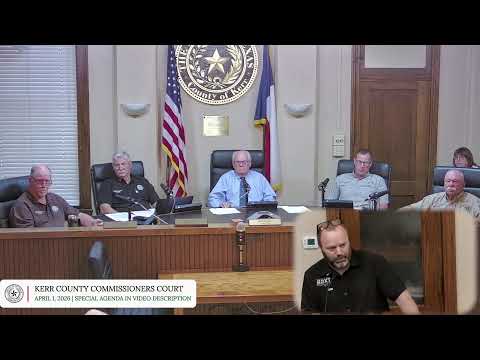
Kerr County Commissioners on April 1 approved a resolution opposing the proposed Howard Solstice transmission line and voted to file a protest comment with the Public Utility Commission of Texas (PUCT) rather than pursue intervenor status.
A committee member who moved the resolution said the PUCT project under consideration lists 77 possible routes, 19 of which pass through Kerr County. He described the proposed transmission structures as "monstrous," citing reported tower heights in the range of roughly 130 to 215 feet and a roughly 200-foot right-of-way. "They're anywhere from a 130 to 215 feet high, requires a 200 foot right of way," he said, and raised the prospect that eminent domain could be used to acquire right-of-way through private property.
The mover and several public commenters raised financial concerns, citing widely varying cost estimates for the project—"I've seen estimates between 33,000,000,000 and 80,000,000,000"—and arguing that ratepayers would ultimately absorb costs. The mover also suggested monthly electricity bills could rise by roughly $100 to $200 for many customers if costs are passed through; he said this would compound prior increases recorded after severe winter weather.
Multiple local property owners and advocates urged the court to sign the resolution. Barbara Ferguson, a Kerrville resident, said the lines appeared poorly planned and could violate property rights if eminent domain were used. Robert Newman, a GIS manager at the Kerr Central Appraisal District and part-owner of an affected property, said maps show a tower could sit within about 1,200 feet of his house and asked that routes be moved to avoid the view from his home. Robert Hunter Moose, whose family ranch (Hillcrest Ranch) would be affected, said the route as drawn ‘‘zigs up right by the house’’ and would harm long-held family property values and views.
State Representative Wes Bridal (Texas House District 53) told the court that he had sought to intervene but that his request was declined; he asked the administrative process to slow and for more independent studies and direct landowner engagement. In remarks and a submitted protest letter he cited HB 5066 (as referenced in the meeting) and said the state-level process had been accelerated; he estimated the project would clear substantial acreage across the Hill Country if built and urged protections for private property and aquifer recharge zones.
On procedure, the mover recommended filing the county's opposition as a PUCT protest comment because intervenor status would likely require partnering with affected landowners and substantial legal expense. The court voted by raised hands; the presiding judge said he would abstain because he lacked sufficient data, and the remaining members indicated support. The judge recorded four in favor and his own abstention; commissioners directed that the signed resolution be attached to the PUCT comment form and submitted before the day's filing deadline.
The resolution directs county staff to submit a protest comment in the PUCT's standard format and does not authorize the court to retain counsel as an intervenor. Several speakers urged affected landowners to consider individual intervention where appropriate. The court adjourned after the vote.