Get Full Government Meeting Transcripts, Videos, & Alerts Forever!
Get email alerts on the Convenience Store Tobacco topic
No spam. Unsubscribe anytime.
Planning commission asks High Mart applicant for floor plan, sales detail amid tobacco and illicit-product concerns
Summary
The Planning Commission declined to move forward with a final decision on High Mart (78.5 South Highland Drive) after staff and commissioners raised concerns that the tenant space and display layout resemble a specialty tobacco shop and could violate state thresholds; commissioners asked the applicant for a floor plan, product layout and sales pro forma and signaled the conditional-use application will be continued.
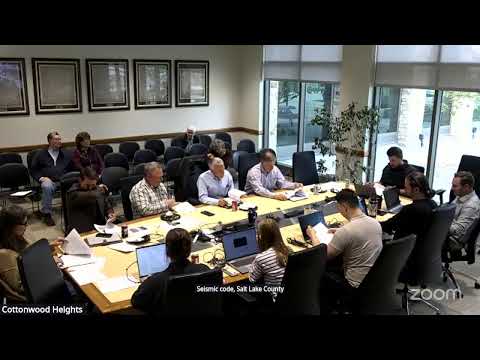
Cottonwood Heights planning staff and commissioners on April 1 pressed the applicant behind a proposed High Mart convenience store at 78.5 South Highland Drive for more documentation after staff presented photos and details suggesting the space currently resembles a tobacco specialty retailer rather than a neighborhood convenience store.
"As the application submitted, it does meet the definition of a convenience store," a staff member said, noting the applicant proposed hours of 9 a.m. to 9 p.m., roughly 50 customers per day and a 1,280-square-foot tenant space with about 800 square feet of retail. But staff also presented photos of extensive tobacco displays and glass cases that prompted commissioners to question whether the business, as currently configured, would exceed state thresholds that distinguish a specialty tobacco shop from a general tobacco retailer (quotas discussed included roughly 20% of floor/display area or 25–35% of quarterly sales).
Commissioners raised concerns about the store’s proximity to schools and childcare — including Brighton High School and nearby preschool/daycare facilities — and flagged products shown in staff photos such as CBD/THC-derivative items, kratom and nitrous oxide. One committee member summarized the concern bluntly: if the shop "looks like a duck and quacks like a duck," it may be operating as a specialty tobacco outlet rather than a neighborhood convenience store.
Staff said the Salt Lake County health department and municipal enforcement have limited capacity; enforcement of product-mix thresholds is largely complaint-driven, and county inspections commonly focus on underage-sales stings rather than inventory audits. Commissioners discussed several options to manage the risk: require a detailed floor plan that shows product placement, require a pre-opening site inspection before issuing a local business license, ask the applicant for a pro forma or sales breakdown by product category, and add explicit permit conditions that would allow revocation of the conditional-use if the business later operates outside approved parameters.
The applicant told staff he would work with the city to reduce tobacco display area but said he would not remove tobacco products entirely. Commissioners asked the applicant to provide a clearer business plan and product-layout documentation; staff said the application would not move forward at the work session pending those materials. The commission did not vote to deny or approve the permit at the meeting; staff will return the application to the commission after the applicant submits the requested documentation.