Get Full Government Meeting Transcripts, Videos, & Alerts Forever!
Get email alerts on the Education School Board Forum topic
No spam. Unsubscribe anytime.
Neenah school board candidates spar over vouchers, special‑education funding and police in schools
Summary
Four candidates at a League of Women Voters forum in Neenah urged greater transparency on voucher costs and blamed low state reimbursements for special‑education shortfalls; candidates largely opposed routine police presence in schools and differed on classroom uses of artificial intelligence.
Four candidates for the Neenah Joint School District Board of Education laid out competing priorities Wednesday at a League of Women Voters candidate forum, focusing on private‑school vouchers, state funding for special‑needs students, whether police belong in schools and how to use artificial intelligence in classrooms.
"On your tax bill, you should absolutely know when your property taxes are going up," said Samuel Roth, who asked for a separate line showing voucher costs and said private schools receiving public dollars should be accountable for students’ educational outcomes. Roth, an analytics professional and parent, urged transparency in district finances and measurable accountability for any school that receives public funds.
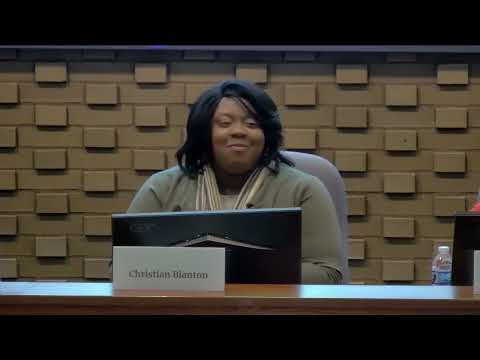
Christian Blanton, a parent of five, said she also supports a separate voucher line on property taxes and wants families to be able to compare academic outcomes in private and public schools. "I'm a person that likes transparency," she said, adding that boards need diverse skills to represent families effectively.
Becky Heitke Kwiatkowski, who said she works for the City of Neenah and has an accounting background, criticized the voucher program and cited a district estimate that roughly $4,300,000 had gone to vouchers. "That's $4,300,000 that we cannot use to support our teachers, to support our programs, to support our special education," she said, adding she could not support the voucher program without stronger accountability and transparency.
Tom Hanby said vouchers weaken public education and likewise favored showing voucher costs on tax statements. "Public education, public money," he said, arguing that siphoning funds from districts diminishes quality.
On special‑education funding, candidates said the state pays far less than the cost of services. Tom Hanby and others described the state reimbursement as roughly 35 percent, leaving local general‑fund dollars to cover the rest; Becky Heitke Kwiatkowski noted that for some students the extra cost can reach as much as $100,000. Samuel Roth said the shortfall forces the district to run deficits and make difficult budget choices.
Views on AI varied. Roth used a metaphor to urge caution: AI can be a powerful tool but must be tightly managed so it does not do the "hard thinking" for students. Christian Blanton and Becky Heitke Kwiatkowski said districts should craft clear policies and training before broad classroom use; Hanby said AI should be taught about but not used as a primary instructional model.
Candidates were nearly unanimous in opposing routine police presence inside schools. "We should not have police in our school," Hanby said, arguing that relying on officers can criminalize ordinary student behavior. Christian Blanton warned against creating a "school‑to‑prison pipeline" based on her experience in Chicago; other candidates called for strong school‑staff interventions and police only when situations require them.
On truancy, candidates emphasized outreach and support rather than enforcement. Roth said most absence stems from family and access issues and should be addressed with social workers and community services, not police. Several candidates called for faster attendance notifications and improved family engagement.
On civic engagement, candidates proposed returning voter‑related activities to schools, in‑school registration drives and more classroom instruction in media literacy and voting systems to boost youth participation. Tom Hanby urged restoring polling sites in school buildings so students see the process firsthand.
The forum ended with one‑minute closing statements from each candidate and a reminder from moderator Deb Andrews about the April 7 election and early/absentee voting options.
The candidates scheduled for the Neenah Joint School District ballot are Samuel Roth, Christian Blanton, Becky Heitke Kwiatkowski and Tom Hanby. Voters in the district may choose three candidates in the upcoming election.