Get Full Government Meeting Transcripts, Videos, & Alerts Forever!
Get email alerts on the Affordable Housing Development topic
No spam. Unsubscribe anytime.
Developer outlines Southville Apartments plan, warns deeper affordability will need big subsidy
Summary
At a Town of Southborough Affordable Housing Trust meeting, developer James Benincasa described a proposed two-building, ~60-unit MBTA-zone project with a 10% affordability requirement and said adding deeper affordability would materially alter project finances; trustees asked him for written pro forma numbers and discussed non-monetary support such as letters to planning boards.
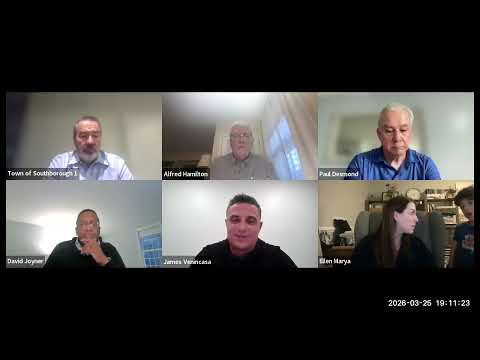
James Benincasa, the developer behind the Southville Apartments proposal for South Hill Road, told the Affordable Housing Trust that the project currently being permitted is in an MBTA-designated zone, would total roughly 60 rental units in two buildings and would meet the MBTA minimum of 10% affordable units.
"This 1 is an MBTA... this 1 is a 10% affordable," Benincasa said while describing the plan and noting the team has filed with conservation and must adjust the layout after an ORAD altered wetland boundaries. He said the site is about 4 acres and the proposal meets parking requirements, though some elements such as a clubhouse face pushback.
Why it matters: trustees said the project could help the town reach its affordable-unit goals, but Benincasa warned that increasing the share of deeply affordable units would “literally change your performer” and could require millions in subsidy. "To be honest with you, we're close to paying almost $2,000,000 for the land," he said, citing land acquisition as a major cost pressure that limits his ability to increase the affordable share.
Board members pressed for detail and oversight mechanisms. Benincasa explained how affordable units are administered: the town gets first access to applicants and a monitor (he named a staff member who handles unit monitoring). On per-unit costs, he estimated construction in the "high threes to 500" (thousands) per unit depending on size and finishes, and said many deals must front-load developer cash before bank draws begin.
Trustees and a banking-side participant cautioned that lenders scrutinize debt ratios and that subsidies must be large to materially shift pro formas. A trustee suggested the board could offer non-financial help, such as letters of support before planning, zoning or conservation boards; Alan offered that the trust could signal consistency with long-range planning to aid permitting. Benincasa said he would calculate and deliver a specific subsidy number showing what it would take to add an additional affordable unit and to demonstrate amortization effects.
Trustees asked Benincasa to return with a written 'penciled' analysis that includes financing impacts over the project's horizon; several members also discussed whether the town could be more effective by contributing land or pursuing smaller, for-sale solutions on town-owned parcels. Benincasa offered to help the trust by sharing his permitting and design staff resources if the board wanted to explore other land or development approaches.
Next steps: Benincasa will produce numbers on the incremental subsidy needed to add affordable units. Trustees said they may provide letters of support and will evaluate whether non-monetary support or land contributions would yield a better return than direct subsidy.