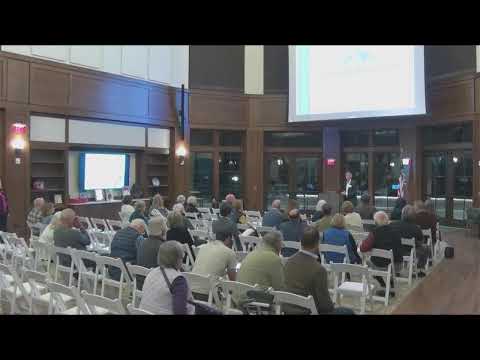
Goochland supervisor outlines $107 million budget projection, sets public hearing and tax-rate dates
Loading...
Summary
Supervisor Jonathan Lyle told a District 5 town hall the county projects roughly $107 million in general-fund revenue (a ~3.7% increase), that about $79 million is expected from property taxes, and that a public hearing on the proposed budget is set for next Tuesday; tax rates will be set on the 14th and the budget is slated for adoption May 5.
Jonathan Lyle, District 5 supervisor for Goochland County, told a March town hall that the county projects roughly $107,000,000 in general-fund revenue for the coming year, an increase he said is about 3.7 percent from the prior year. He told residents that about $79,000,000 of that total is expected to come from property taxes and that the county’s budget process remains open to public comment.
"This is your money," Lyle said. "If you have different opinions, I need to hear that from you." He urged residents to attend a public hearing at the County Administration Building next Tuesday at 6 p.m. He said the board will set tax rates on the 14th and plans to adopt the budget on May 5.
Lyle said the budget assumptions include a projected 4 percent rise in property values; under his scenario, a homeowner whose assessment rises by roughly that figure would see a modest increase in annual taxes if the current rate (53 cents per $100 of assessed value) remains unchanged. He gave the example that a $500,000 home with a 4 percent increase could produce roughly $100 more in annual taxes at the same rate.
Lyle described the county’s four primary budget commitments as public safety, education, transportation and elections, and said roughly two-thirds of local spending is devoted to schools and public safety combined. He cautioned that cutting the tax rate by a penny would trim roughly $1,000,000 from county revenues and asked residents what services they would prefer to reduce if they favored a lower rate.
The supervisor also described procedural steps available to residents who disagree with assessment values: informal meetings with the assessor, formal appeals, petitions to the board of equalization, and circuit-court appeals. He said the assessor’s dashboard and data will be posted on the county website for residents to review.
Lyle concluded by encouraging residents to use county dashboards and to submit written comments or appear at the advertised hearing, noting that formal decisions on rates and the final budget are still weeks away.