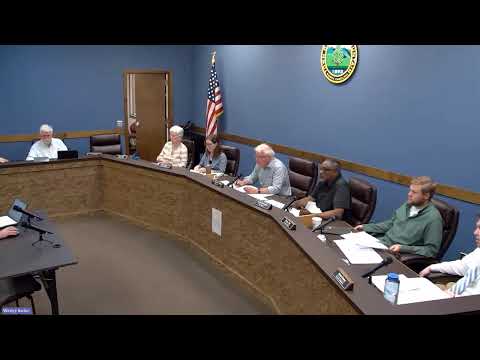
Black Mountain staff outline draft rules for data centers, citing noise, buffer and water concerns
Loading...
Summary
Town planning staff said the planning board has recommended a text amendment defining 'data processing facilities' and imposing conditions — including 35-foot height limits, 25-foot buffers, a quarter‑mile separation from residences/schools/places of worship, acoustical studies and 55 dB/50 dB noise caps — while emphasizing water and energy impacts. Council asked staff to return with formal language.
Town planning staff briefed the Black Mountain Town Council on a planning-board recommendation to add a definition and rules for "data processing facilities" — a category that would encompass modern data centers and some cryptocurrency operations — and asked council for direction before formal text is brought forward for public hearing.
The planning board’s draft would permit the use only in the town’s heavy industrial district and impose a package of conditions: a 35-foot height cap, a minimum separation of one-quarter mile from any school, place of worship or residence, an acoustical-engineer study with noise limits (55 decibels during daytime hours and 50 decibels at night), at least 25 feet of vegetative buffering around the site, security fencing and a required decommissioning plan for electronic waste with an abandonment trigger if a facility is nonoperational for 180 days. "There is no data center being proposed," Planner and Zoning Administrator Russell Kate said, describing the work as proactive preparation so the town is not "caught flat footed" if a proposal appears.
Why it matters: speakers and staff repeatedly flagged two operational concerns that drive the draft approach. First, data centers can consume large amounts of water and power; Gail Young and other residents expressed fear that a large facility could strain municipal water or unintentionally displace customers. Second, noisy HVAC and cooling equipment are the most frequent cause of neighbor complaints in comparable projects, so the planning board proposed strict decibel thresholds and measurement points at the edge of the facility rather than at the operator’s quietest point.
Staff framed the proposal as a balance between land‑use authority and the town’s obligations under state statute: the planning board suggested allowing the use under strict rules because state law generally limits a municipality’s ability to prohibit an otherwise allowed business type. Kate and other staff also noted that other jurisdictions in the region have pursued similar paths: Buncombe County has defined data centers and permitted them with condition lists while treating cryptocurrency mining as a distinct use, and nearby communities have adopted moratoria in specific circumstances to allow time to update land‑use codes.
Council reaction and next steps: Council members asked staff to route the planning-board recommendation through the normal process, including a planning‑board public hearing in April and a May public hearing before the town council. Staff also said they will coordinate with county and regional partners on water and electric capacity questions and will return with refined draft language for the council to consider a formal public hearing schedule.
Quotes
"There is no data center being proposed. We are doing this so that we have a plan before there ever is one," Russell Kate, Planner and Zoning Administrator, said.
"Every town that I've read about in the last few years that has had a data center move into their area has found their citizens lose access to reliable, high quality water," resident Gail Young said during public comment, urging the council to insist on clear resource‑management plans.
The council did not take action on the draft ordinance at the meeting; staff said a planning‑board recommendation will appear on the council’s April agenda and that a public hearing could follow in May.