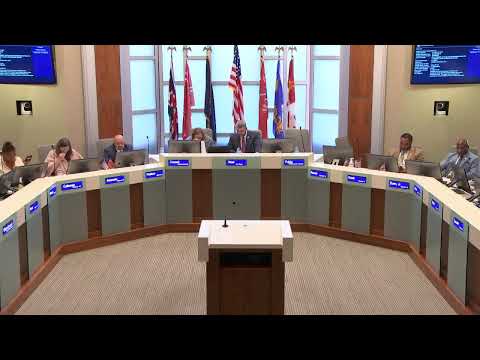
Council advances amendments to drag-racing ordinance to broaden penalties, fund enforcement
Loading...
Summary
At its March 25 meeting, the Metropolitan Council approved amendments broadening who can be penalized in illegal street-racing events (including people who promote events online), directed penalties into a restricted enforcement fund, and aligned vehicle-impound rules with state law; supporters said the measures give law enforcement new tools while some members warned about penalizing bystanders.
The Metropolitan Council of the Parish of East Baton Rouge voted March 25 to approve amendments to the parish’s drag-racing ordinance intended to broaden liability for people who promote or facilitate illegal street racing and to create a dedicated city-parish account for fines to fund enforcement.
Councilman Rowdy Goday, who presented the ordinance changes, said the measure makes four main changes: expand the definition of “spectator” to include people who livestream or use social media to promote or facilitate illegal street racing; create a dedicated account for penalties to support law-enforcement technology and traffic enforcement; align the parish’s vehicle-impound period with whatever the state authorizes; and allow private-property owners who knowingly permit stunt-driving on their lots to be held accountable. “It points to the state law and says whatever the state does as the maximum, we wanna align with that same thing,” Goday said in explaining the alignment with state statute.
Multiple council members voiced reservations about broadening the spectator definition. One councilman said he was uncomfortable with treating spectators as participants and asked for stronger safeguards in the investigative process, saying, “I just don't like to treat spectators as participants.” Council members pressed staff for specifics on how fines and impound fees are currently routed and whether shifting revenue into a restricted fund would erode the general fund.
BRPD representatives described enforcement and investigatory procedures. Deputy Chief Noel said officers use social-media intelligence and special investigations to identify events and that policing them can require “almost a dozen to two dozen officers, units, tires, gas, and everything else that goes along with it,” including drones and other technology. Noel said the department’s goal is to deter events through investigation and pre-planning, and he described the operational costs that the restricted fund is intended to offset.
Supporters said the changes are designed to give police additional tools to curb dangerous gatherings that block roadways and impeded emergency response. Critics urged caution to avoid penalizing people who are inadvertently present; proponents responded that the draft uses the phrase “knowingly present” and builds in investigative review, video and social-media evidence to distinguish bystanders from organizers.
A motion to approve the ordinance as amended was made by Councilman Hudson and seconded by Councilman Goday; the motion carried by voice vote. The ordinance cites state impound authority and references Louisiana Revised Statute 32:65; council members did not specify an implementation timetable at the meeting.
The council took no additional formal action at the meeting on implementation details; those will be handled by staff and law enforcement per existing administrative processes.