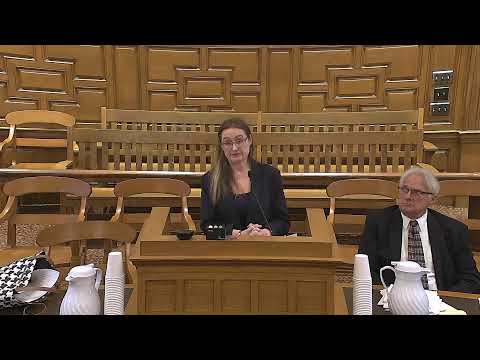
Defense says volume of prior-bad-acts evidence overwhelmed Suarez trial; prosecutor defends admission
Loading...
Summary
Courtney Dunn argued the trial judge erred by admitting extensive prior-bad-acts evidence (95 pages of messages and photos) in Commonwealth v. Suarez, saying the volume and similarity to charged conduct unfairly prejudiced the jury; the Commonwealth countered that probative value and context justified admission.
Courtney Dunn, arguing for Mr. Ortiz Suarez, urged the panel to reverse his conviction on the ground that the trial court admitted a high volume of prior-bad-acts material (including 95 pages of text messages and several photographs) that unfairly prejudiced the jury. "The admission was error for 3 reasons, any 1 of which requires that his conviction be reversed," Dunn told the justices, listing improper purpose, overwhelming volume, and undue prejudice as independent grounds for reversal.
Dunn said the trial judge allowed the evidence for multiple purposes — pattern of conduct, motive, intent, and knowledge — and that the number of uncharged transactions and the sheer quantity of similar messages and photos effectively converted the trial into a device to label the defendant a drug dealer. The defense emphasized that no drugs were recovered from Suarez, that much of the evidence was circumstantial, and that the messages were not exchanged with the putative buyer who testified at trial.
Jennifer Cohen, for the Commonwealth, acknowledged the images' low probative value but defended admission of the messages and their use in context. Cohen argued probable cause existed at the time of arrest and that the admitted communications provided confirming circumstances and context; she also noted the jury instruction allowing jurors to weigh exhibits and testimony. The panel asked pointed questions about temporal limits for admissibility, the plausibility of fabrication, and whether the probative value outweighed unfair prejudice when the prosecution's theory relied heavily on witness testimony and circumstantial facts.
After argument and bench questioning on the balancing test for prior-bad-acts evidence, the case was submitted to the panel for decision.