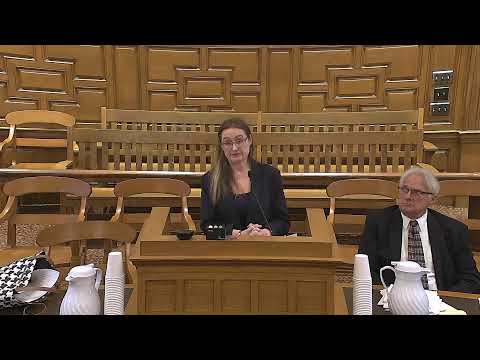
Defense urges reversal in Ramirez appeal, citing improper elicitation of defendant's silence
Loading...
Summary
In Commonwealth v. Ramirez, defense counsel Erin Opperman told the three-judge panel the prosecutor elicited testimony that revealed Ramirez's invocation of her right to remain silent and argued the trial error was not harmless given the case's reliance on witness credibility and late disclosure of a recorded call.
Erin Opperman, defense counsel for Miss Ramirez, asked the appeals court to vacate Ramirez's convictions, arguing that a Doyle error occurred when the trial record allowed the jury to learn that Ramirez had invoked her right to remain silent. "I'm here asking the court to, vacate miss Ramirez's convictions, and claim 3 errors, occurring in the trial court," Opperman told the panel.
Opperman said the central legal question is not whether an error occurred — the Commonwealth conceded that point — but whether the error was harmless beyond a reasonable doubt. She argued the totality of the questioning, including two separate officer answers and the sequence in which they were elicited, made it likely the jury heard an impermissible suggestion that Ramirez invoked her rights. She emphasized that the case turned on witness credibility, with little corroborating evidence and a jury that twice reported being deadlocked before returning a verdict.
During questioning, the panel pressed defense counsel on whether a curative instruction or a clear explanation of what it means to have testimony "stricken" was given to the jury; Opperman said she did not believe a meaningful instructional explanation was provided and that only the second officer statement was clearly stricken. Opperman also raised a separate disclosure issue: a recorded phone statement in which Ramirez reportedly referenced "blue pills" was not turned over to defense counsel until months after it was created. She argued the late disclosure and the missing context increased prejudice to the defendant.
Paul Lin, for the Commonwealth, conceded that the question about whether the defendant had received Miranda warnings was "an ill advised question," and acknowledged the trial judge struck the offending testimony. Lin urged the panel that the judge's intervention and the fact the prosecutor never returned to the subject made the error harmless in this case, and described the failure to preserve a recording as negligent rather than in bad faith. Lin said the defendant ultimately elicited some exculpatory material and that the contested statement was not central to the prosecution's closing argument.
The panel asked detailed questions about responsiveness, who introduced the subject at trial, the timing of the supplemental report, and whether the jury received sufficient guidance to ignore stricken testimony. After argument and questioning from the bench, the matter was submitted for decision.