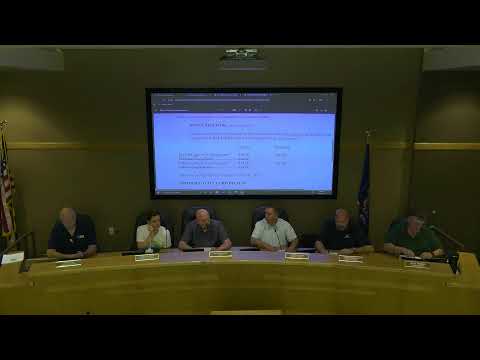
Smithfield staff outline FY2026–27 budget priorities as building needs and equipment requests mount
Loading...
Summary
City staff presented the draft FY2026–27 budget and told the council that equipment replacements and deferred building maintenance are the largest near-term pressures; administration proposed a 3.5% cost-of-living increase plus a 2% discretionary pool and recommended paying cash for major equipment where possible.
City staff on Wednesday evening walked the Smithfield City Council through a preliminary fiscal year 2026–27 budget that keeps operating spending largely flat while flagging mounting capital needs and deferred building maintenance.
The administration outlined an approach that includes a baseline 3.5% cost-of-living adjustment for employee wages and a 2% discretionary pool managers can use to reward key staff, while proposing to fill open positions but not add new full‑time roles. "We looked at the state of Utah for 2025 to see where inflation was," a city presenter said, explaining the rationale for the COLA and the discretionary 2% pool.
The staff memo emphasized two persistent funding pressures: infrastructure and aging buildings. The presentation listed several city facilities that need repairs or replacement in the coming years, including the senior center (log rot and roof work that staff estimated could be in the six‑figure range), the historic cabin (roof in need of bids), and ongoing maintenance backlogs across the civic center and youth facilities. "We have a building problem," the city presenter said, noting that much of the equipment and buildings in use are decades old.
Staff also described major capital projects already planned or under consideration: a water tank and a spring‑line project to address pressure and supply, stormwater projects with an upcoming bid opening, and a continuing library general plan with Utah State University. Administration said it prefers to pay cash for several pieces of major equipment shown in tonight's packet rather than lease or bond them. "All of the equipment presented tonight, not one of it would be a lease or a loan," the presenter said. "Every bit of it would be paid in cash, as proposed."
Council members asked about specific tradeoffs between building repair and equipment purchases. Staff acknowledged uncertainty around health‑insurance costs, which could prompt further adjustments to the budget when final renewals arrive in the coming weeks.
What happens next: staff will continue refining numbers over March–June, with additional council review in April and May, followed by a public hearing and final vote in June.