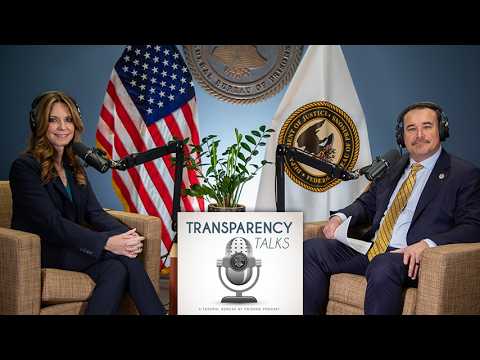
Deputy Assistant Inspector General Sandra Barnes outlines OIG probes into BOP staff corruption and contraband
Loading...
Summary
Sandra Barnes, Deputy Assistant Inspector General for Investigations, told a podcast audience the Office of Inspector General receives about 17,000 complaints a year (about 80% involving the Federal Bureau of Prisons), runs parallel criminal and administrative investigations, and is pursuing increased prosecutions for staff misconduct and contraband schemes.
Sandra Barnes, Deputy Assistant Inspector General for the Office of Inspector General's Investigations Division, said the office receives about 17,000 complaints a year and that roughly 80% of them concern the Federal Bureau of Prisons (BOP).
On Transparency Talk, Barnes described how the Investigations Division is organized into nine regions and two specialty offices, and said roughly 95% of cases open as criminal inquiries. "We're running two investigations for every case that we have," she said, meaning the OIG pursues both criminal allegations and parallel administrative-misconduct reviews.
Barnes said common criminal allegations include introduction of contraband, bribery, excessive use of force and staff sexual abuse. She described intake channels that feed cases to the OIG: inmate mail ("about 300 to 500 pieces of mail a month"), a PREA email box, the hotline and website portal, referrals from members of Congress, and tips from staff and BOP internal affairs.
Describing how cases are built, Barnes said inmate networks and "peripheral players" often provide leads that investigators corroborate with subpoenas for bank records, phone records, social-media accounts and other evidence. "We just have a lot of tools that we can gather all the evidence and... they just eventually get caught," she said, describing a pattern in which intelligence and documentary proof produce indictments.
Barnes warned that resigning or retiring does not prevent prosecution. "We have indicted and arrested many people who had already resigned or retired," she said. She also said that, where prosecutors decline criminal charges, the OIG still completes administrative investigations and includes findings in final reports for the Bureau of Prisons.
The OIG official described the evolving threat from contraband cell phones, which she said are increasingly used to facilitate crimes beyond personal communication, including drug trafficking and murder-for-hire plots. She recounted prior episodes in which multiple phones were shipped in large quantities and then distributed across housing units, creating cross-unit criminal networks and safety risks.
Barnes said the OIG works closely with BOP wardens and internal affairs offices and that cooperation has grown. She said OIG audits and inspections can help BOP identify infrastructure or process weaknesses and support requests for funding or policy changes.
On labor relations, Barnes said some union representatives in the past have interfered with compelled interviews or advised employees in ways that impeded investigations, while other representatives were professional and cooperative. She acknowledged that such interventions sometimes prolonged or disrupted interviews and evidence-gathering.
Barnes also described an increase in prosecutions for false statements and false reports, citing prosecutions under 18 U.S.C. 1001 for false statements and saying the OIG and U.S. Attorney's Offices have pursued false log entries, false PREA reports and false use-of-force reports. She noted another legal avenue, 18 U.S.C. 4 (misprision of a felony), for individuals who are aware of criminal conduct and do nothing to report it.
The episode closed with the host and Barnes thanking each other and stressing ongoing collaboration between OIG investigators and BOP leadership to remove corrupt staff and improve safety.