Waste commission executive outlines diversion programs, landfill gas-to-energy and user-fee model at Davenport management meeting
Loading...
Summary
Scott County Waste Commission executive director Bryce Stalcup briefed Davenport City officials on the commission's operations, including a landfill gas-to-energy project, recycling and hazardous-waste programs, and the user-fee funding model that keeps services from relying on local tax dollars.
Bryce Stalcup, executive director of the Scott County Waste Commission, told Davenport City officials that the commission is fully funded by user fees and tipping fees and operates a suite of recycling, hazardous-waste and landfill-diversion programs that serve Scott County and dozens of neighboring jurisdictions.
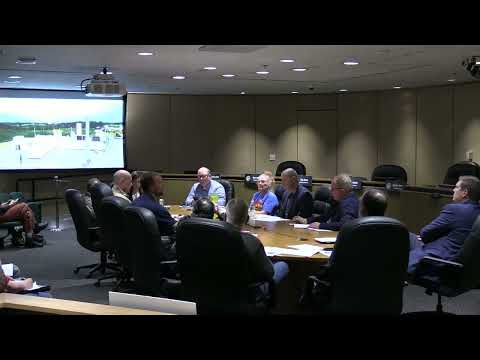
Stalcup gave the presentation during the city's management update meeting, walking officials through the commission's history, facilities and recent investments. "Our mission is to provide sustainable recycling and waste management services, that positively impacts Scott County," he said.
Why it matters: The commission's user-fee model and regional partnerships affect how much cities pay for recycling and disposal services. Stalcup said Davenport and Bettendorf pay $10 per ton to the commission for recycling services, while an example comparison to Cedar Rapids — which relies on private contractors — cited a much higher cost (quoted in the presentation as $112 per ton). Those differences influence municipal hauling and budgeting decisions.
Stalcup described a recent gas-capture partnership with Linwood Mining & Minerals and WAGA Energy that cleans landfill methane and injects it into the Mid American pipeline. "This plant cleans that gas, makes it pure methane, and then it goes right into the Mid American pipeline," he said, adding the project, which launched in November, is now supplying energy equivalent to roughly 4,000 to 5,000 homes annually.
He also reviewed diversion and reuse programs at the Scott Area landfill and associated facilities: shingle, bicycle and tire recycling; an electronics recovery center that has shifted from scrapping to refurbishment and resale; and a household hazardous material (HHM) facility that accepts paints, pesticides, mercury-containing bulbs and automotive fluids. Stalcup said the HHM program served more than 14,000 residents and over 700 businesses in 2025 and removed about 700,000 pounds of hazardous material from the waste stream that year.
On operations and technology, Stalcup said investments in optical sorters, robotics and other equipment have increased processing capacity and reduced residue rates. "In the Midwest, we have a great residue rate of less than 15%," he said, and added the commission uses a 10-year average and reserve funds to manage commodity-price volatility.
Council members asked questions about how the commission charges cities and private haulers. Stalcup explained that large cities that operate their own collection (Davenport, Bettendorf) are charged per ton and that fees are reviewed annually; he said the commission limits fee increases to roughly 2% to 3% a year.
The presentation closed with a summary of strategic priorities: reinvesting in aging infrastructure, strengthening community education, and expanding diversion measures to prolong landfill life (capacity reported through 2070, with engineering and potential expansion under study). Stalcup invited city officials to tour facilities and to contact commission staff with follow-up questions.
The management update meeting included a short question-and-answer period; council members thanked Stalcup for the briefing. The meeting was then adjourned.