Board approves health plan changes but rejects eliminating district’s income protection plan
Loading...
Summary
After lengthy debate about employee protections and costs, the Green Bay Area Public School District approved changes to health insurance plan design and rates but voted down a proposal to transition the district’s Income Protection Plan (IPP) to a voluntary short‑term disability plan.
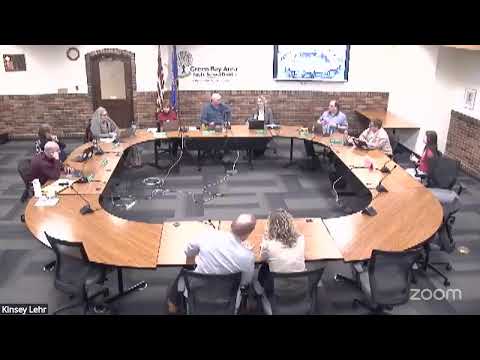
The Green Bay Area Public School District board on March 23 approved several changes to employee health plan designs and rates but did not approve a proposal to transition the district’s internally administered Income Protection Plan (IPP) to a voluntary short‑term disability offering.
District staff presented actuarial estimates and scenario testing for the proposed plan designs. For the recommended co‑pay plan changes, staff said the estimated average increase for a single employee would be about $461.11 annually and $1,238.28 annually for a family on the co‑pay plan when the premium and expected out‑of‑pocket changes are combined. For the high‑deductible plan, staff projected average annual savings for many covered individuals.
The board approved the package of recommended plan design changes and set 2026‑27 rates for active employees and retirees in a series of recorded online votes. Staff also described a proposed spousal surcharge, modeled on a neighboring employer’s approach, and estimated it could yield about $325,000 annually if implemented at $400 per month; board members debated reducing the surcharge to $200 per month and sought additional modeling.
A separate motion proposed transitioning the district’s Income Protection Plan — a district‑run benefit that pays a portion of salary during extended absences — to a voluntary short‑term disability option. Several board members and multiple public speakers strongly opposed that change, arguing the IPP functions as a safety net for employees facing serious illness or extended leave and that voluntary offerings historically produce low take‑up rates and leave vulnerable employees exposed.
"This is a terrible thing to do to staff," one board member said during the discussion, warning that making income protection optional could leave people unable to cover housing and medical costs during serious illness. Another board member said she understood the fiscal pressure but noted such benefits are rare in other districts and are critical for retention.
On the motion to transition IPP to a voluntary plan, online voting did not produce a majority in favor; the motion failed. Other benefit‑related motions to set plan designs and rates for active employees, retirees, dental and vision plans passed in subsequent votes.
Next steps: district staff will finalize implemented plan changes for enrollment and provide additional modeling on spousal surcharges and optional products as requested by the board. The IPP will remain in place pending future board discussion and budget decisions.