Green Bay parents, students and alumni urge board to save Fine Arts Institute amid budget cuts
Loading...
Summary
More than two hours of public comment at the Green Bay Area Public School District board meeting on March 23 focused on pleas to preserve the Fine Arts Institute at East High and feeder programs, with speakers citing high graduation rates, college pathways and benefits for low‑income and neurodiverse students.
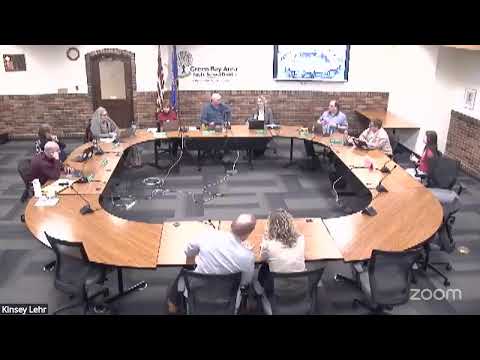
Dozens of parents, students and alumni urged the Green Bay Area Public School District board on March 23 to preserve the Fine Arts Institute at East High School and associated feeder programs as the district faces a multi‑million‑dollar budget shortfall.
"The idea of the institute being cut is devastating," Chris Mariucci said during the public comment period. Mariucci, president of the East High performing‑arts parents group and a resident of the East Side, asked how the district planned to measure a return on investment for arts education and urged equitable cuts across programs rather than singling out the arts.
Multiple speakers offered personal testimony about the program's effects. Yana Peguero Almonte and her sister Rizelle, both early Fine Arts Institute participants, described how the pathway launched musical careers and provided fundraising and community performance opportunities. Silas Bartel, a current East High sophomore in the theater strand, and other students described improved academic engagement and college opportunities tied to participation in the institute.
"This was, in many ways, largely due to the care and dedication and instruction of the teachers at the Green Bay Fine Arts Institute," Yana Peguero Almonte said. "To take that away from potential future generations would be a critical misstep for the community."
Parents and community members emphasized access and equity. William Tubbs, who works in the regional entertainment trades, said arts education creates local career pathways and benefits low‑income students who otherwise could not access similar training. Several parents said surveys and program data show the Institute is a factor in families choosing East High School and that a majority of its students persist and graduate.
Board members did not make a decision on funding during the meeting. President Lyerly thanked the speakers and acknowledged the volume of comment; the board later voted on a series of consent and budget‑related motions elsewhere on the agenda.
The public testimony also included requests for transparency around an ongoing ROI (return‑on‑investment) study: several speakers asked the district to publish the metrics, methodology and success criteria that will guide any recommendation about the Institute's future.
Next steps: the board did not vote on program eliminations at the March 23 meeting. District leaders and board members indicated they will continue budget analysis and community engagement in the weeks ahead, and the district is also studying an operational referendum as a possible route to offset shortfalls.