Laredo council presses staff on health-plan deficit as freestanding ERs and specialty drugs drive costs
Loading...
Summary
City officials heard a detailed presentation from HR and consultants showing a projected $6M operational-year deficit and a larger multi-year shortfall for the city's self-funded health plan. Council asked for alternatives to a proposed 24% contribution-plus-plan-design package and directed staff to return with additional options and advocacy steps.
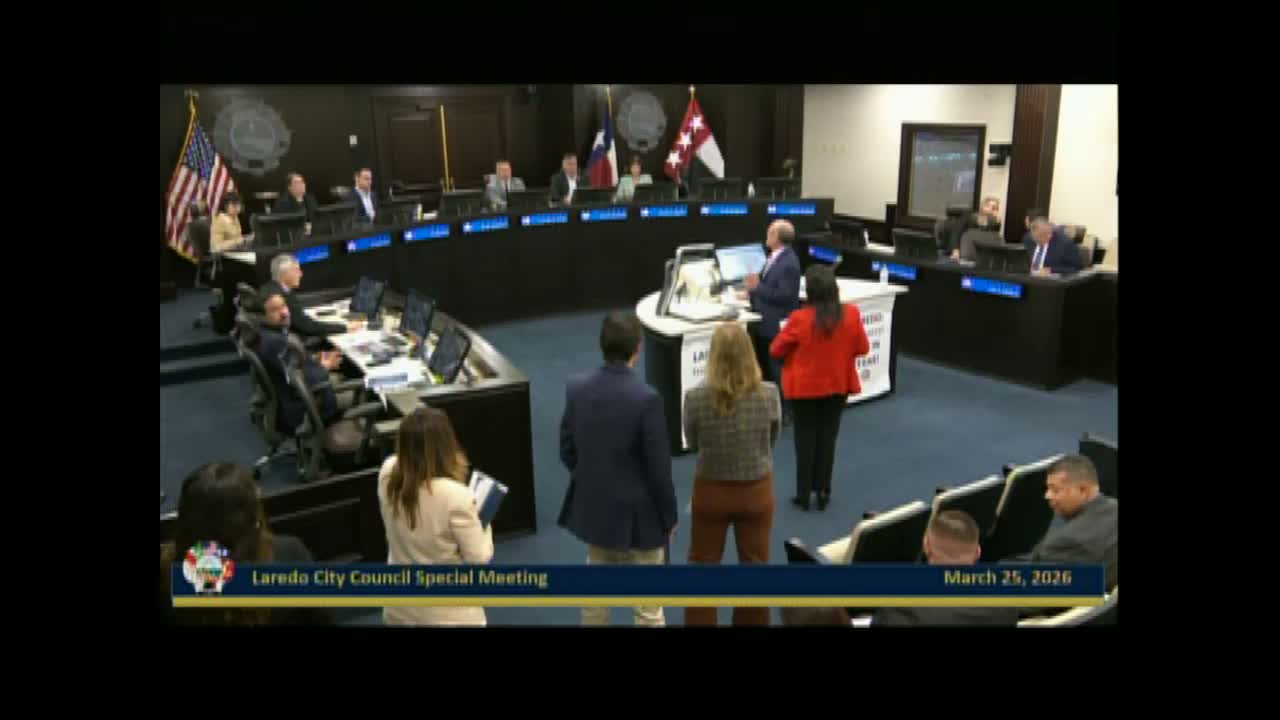
City of Laredo elected officials spent most of a March 25 budget workshop examining the city's self-funded health insurance program after consultants told the council the plan faces significant near-term deficits driven by large claims, freestanding emergency-room utilization and rising prescription costs.
Lede: Human Resources and Gallagher consultants presented data showing a sharply worsening trend for medical and pharmacy expenses; staff projected the current plan-year reforecast would finish roughly $6 million over budget and a status-quo projection for next year could produce a roughly $12.8 million cumulative shortfall unless the city adopts plan changes and contribution increases.
Nut graf: Consultants said the city's stop-loss (individual threshold $300,000) has seen more claimants near and above that threshold and that freestanding emergency departments have been a material cost driver because many code visits as emergent and are paid at higher rates through independent dispute-resolution processes. Prescription trends showed recent growth in GLP-1 drugs and other high-cost specialty therapies. To offset the forecast deficit, consultants presented a package of plan-design changes (higher deductibles for some plans, prescription copay increases and retiree-plan adjustments) that together with an illustrative 24% combined employer-employee contribution change could produce roughly $4.5 million in savings from plan design and reduce the projected budget gap.
Claims and drivers: Gallagher cited three main drivers: (1) an increase in high-cost claimants and cancer-care claims; (2) substantial growth in utilization and price of certain prescription classes (notably GLP-1 agents and some biologics); and (3) freestanding ERs that often bill as emergency visits and then use dispute-resolution processes to collect amounts well above in-network urgent-care equivalents. Consultants said freestanding ER charges recently averaged thousands of dollars per visit versus several hundred for urgent care and that in their sample the city paid millions for those encounters in the past year.
Council concerns and options: Council members pushed back on large proposed contribution increases and asked for creative alternatives that would avoid placing excessive burden on employees. They asked staff to model other scenarios, including smaller contribution increases combined with operational and benefit-design measures, migration scenarios that shift members among HMO, PPO and HDHP plans, and targeted cost-control approaches for specialty drugs. Staff noted the city already offers wellness, telemedicine and after-hours services and said more targeted reporting (for example, department-level utilization and time-of-day) is available and would be provided.
Legislative advocacy: Council passed a motion directing city management to develop a position paper and advocacy strategy for the state legislative session to address policy drivers of rising local costs (items discussed include state-level tax caps and federal/state health-policy changes that affect hospitals and ER billing practices).
Next steps: Council voted to ask staff to return with a focused medical/benefits report that models multiple contribution and plan-design scenarios, examines vendor and utilization controls, and includes department-level and high-utilizer analyses. Staff said it will provide the additional scenarios and data before the budget adoption process.