Get Full Government Meeting Transcripts, Videos, & Alerts Forever!
Get email alerts on the State Budget topic
No spam. Unsubscribe anytime.
Roseville council hears Lansing update warning of $1.1B revenue shortfall and proposed property-tax overhaul
Summary
Adam Wright of Midwest Strategy Group told the Roseville City Council that state revenues are about $1.1 billion below last-year estimates, the governor proposed an $88.1 billion budget, and a House plan to cut $5 billion via property‑tax reform could leave an estimated $300 million gap that risks reduced school or local funding.
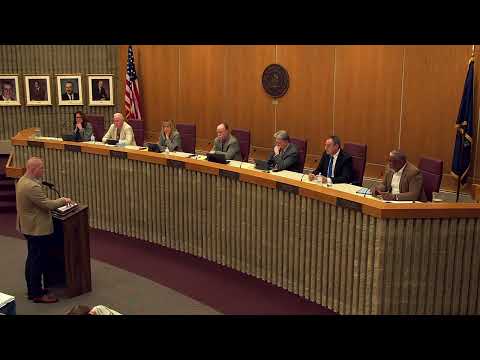
Adam Wright of the Midwest Strategy Group told the Roseville City Council on March 10 that state revenues are down roughly $1.1 billion from last year’s estimates and that Governor’s proposed spending totals about $88.1 billion. Wright said the shortfall is driving debate in Lansing over multiple property‑tax proposals, including a $90 million seniors credit and a roughly $300 million expansion of the homestead credit.
Wright said a separate House Republican plan would eliminate a set of property taxes and rely on a broader sales‑tax‑on‑services shift to recover revenue. “The speaker’s plan wants to cut $5,000,000,000 out of the state budget by doing property tax reform,” Wright said, adding the House proposal projects about $4.73 billion in replacement revenue — leaving roughly a $300 million gap that could mean school districts or local governments are not fully backfilled.
Why it matters: Wright told council members that, if the House plan moves forward, Lansing will need explicit dollar‑for‑dollar backfill commitments to prevent local and school funding declines. He also said the Citizens Research Council has questioned the speaker’s math and indicated the plan may require taxing many more services than currently proposed to meet revenue targets.
Wright warned about several other Lansing proposals that could directly affect cities: bills to restrict millage elections to November general elections and a package of roughly nine bills that would preempt local zoning authority in the name of increasing housing supply. On zoning, Wright summarized proposed limits such as a minimum parcel ceiling (he said ordinances could be restricted so a municipality could not require parcels larger than 1,500 square feet), a 60‑day site‑plan review ‘‘shot clock,’’ limits on minimum dwelling sizes (he cited a 500‑square‑foot floor), capped parking requirements and making duplexes and accessory dwelling units allowable “by right.”
Wright said local governments and groups including the Michigan Municipal League and SEMCOG are pushing back on state preemption, arguing communities are better positioned to set local zoning rules.
Council response and next steps: Councilman Knox asked which of the three property‑tax proposals seemed most likely to pass; Wright said he believed the Senate appropriations chair favors expanding the homestead credit but cautioned that any plan with a price tag will face heavy debate given the budget gap. The council voted to receive and file the Midwest Strategy Group legislative update.
The council did not take any formal position during the meeting; Wright said he will return with more specifics when legislative proposals are finalized.