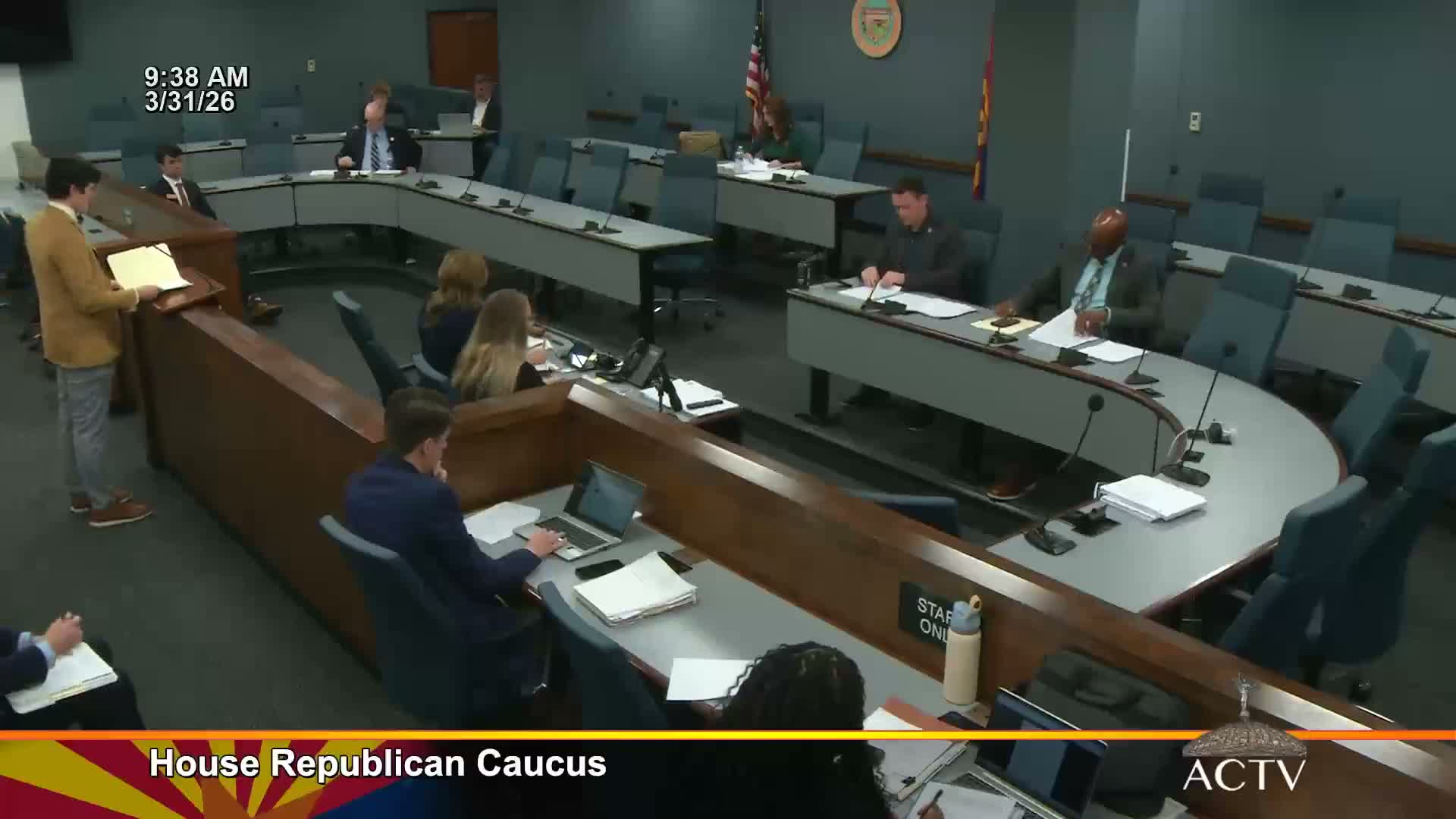
Lawmakers spar over bill adding firing squad as execution option
Loading...
Summary
During a floor reading, lawmakers debated Senate Bill 17‑51, which would let people sentenced to death choose execution by firing squad, lethal injection or lethal gas; opponents warned of trauma to executioners while supporters said choice could lessen harms to staff administering capital punishment.
A floor session of the Arizona Legislature on the consent calendar turned to a sharp debate over Senate Bill 17‑51, which would let a person sentenced to death choose execution by firing squad, lethal injection or lethal gas.
Staff summarized the bill and said its enactment would be conditional on a related voter measure. Lawmakers then exchanged strongly worded views on whether adding a firing squad is appropriate policy and on the effect such a method would have on staff who must carry out executions.
One lawmaker (S11) objected on moral and personal‑experience grounds, saying the method would inflict lasting trauma on executioners. “It always seems that someone wants to do something extreme when they have never had to do it in their life,” the lawmaker said, adding that people who must “pull those triggers…have to live with that every single day.” The speaker said administering a close‑range firearm execution was “a bridge too far” and voiced a firm opposition to that method.
A different lawmaker (S9) disagreed, saying that if Arizona retains the death penalty, providing additional methods could be “slightly more humane for the people who have to administer” it. The lawmaker argued that methods that obscure which individual delivered the fatal round could reduce the burden on any single staff member.
Other members raised policy and constitutional concerns and noted the bill’s conditional linkage to a separate ballot measure. The exchange did not produce a formal vote during the floor reading; staff remained available for follow‑up questions and members indicated further debate could occur in committee or on future floor action.
The session paused consideration of the measure after the discussion; no final action or vote was recorded during the segment.