West Bend officials say budget gap narrowed but staffing reductions likely needed
Loading...
Summary
Assistant Superintendent Lenny Hanson told the school board the district has narrowed a projected budget gap for 2026–27 to about 1.5% but that additional staffing and departmental reductions will be required; the district emphasized teacher pay leads the region and cited fund-balance constraints.
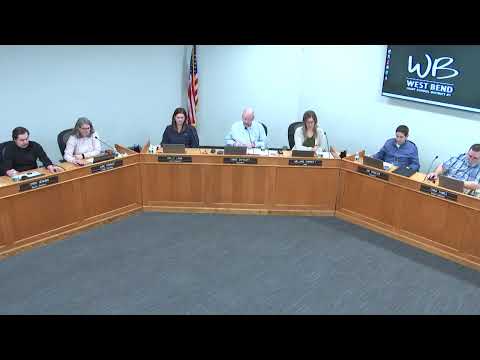
Assistant Superintendent Lenny Hanson presented a detailed budget update March 23 to the West Bend Joint School District board, saying the district has narrowed an earlier projected 6.1% expense-reduction need for 2026–27 to roughly 1.5% but that staffing reductions will likely be necessary to reach a balanced budget.
Hanson described five guiding principles that shape budget decisions—prioritizing instruction, maintaining class-size ranges, preserving student pathways and opportunities, keeping favorable staff-to-student ratios, and maintaining facility maintenance. He said staffing is the district's largest expense and that positions will be reviewed across certified staff, support staff and leadership. Where positions are reduced, administration will seek transfer opportunities into vacancies where possible.
Hanson presented retention and compensation data to support the approach. He said West Bend's teacher turnover rate is 2.56% (excluding retirements) versus a Southeast Wisconsin average of 5.46%, and that the district's average teacher salary is $73,635 with a starting salary of $49,000. He cited WA Trust and DPI staffing reports as the sources for comparative compensation data. Hanson also described strategies to control administrator compensation, including flat-dollar increases and hard caps for administrative roles.
The presentation explained fund-balance policy: board policy requires maintaining 10–20% of annual expenditures in unassigned fund balance. Hanson said much of the district's total fund balance is committed for specific purposes and not available for operations—examples given included roughly $3,000,000 reserved for health-insurance claims and about $1,400,000 held in a Jackson Elementary construction trust.
On benefits, administration said family health insurance premium contributions start at $127 per month for the most commonly selected plan with a maximum out-of-pocket cited as $7,500 per family in the example used to compute employee share percentages.
Hanson said the district is running RFPs for its pharmacy benefit manager and for the employee health clinic (current contract ends in July) and will present a complete staffing plan to the board in April. A preliminary budget is expected in June and a final budget in October.
Board members asked clarifying questions about exhibit labels and counts; staff agreed to correct header numbers on charts for public posting.