Get Full Government Meeting Transcripts, Videos, & Alerts Forever!
Get email alerts on the Cybersecurity topic
No spam. Unsubscribe anytime.
South Pasadena IT manager outlines cybersecurity fixes, $280,000 telecommunications savings
Summary
Tim Schofield, the city’s new IT systems manager, told the Public Safety Commission the city cut phishing vulnerability rates from roughly 60% to 16%, pared an initial inventory of ~220 network vulnerabilities to ~75 (8 critical), implemented four IT governance policies, and identified roughly $280,000 in annual telecom savings from retiring unused lines and renegotiating vendor contracts.
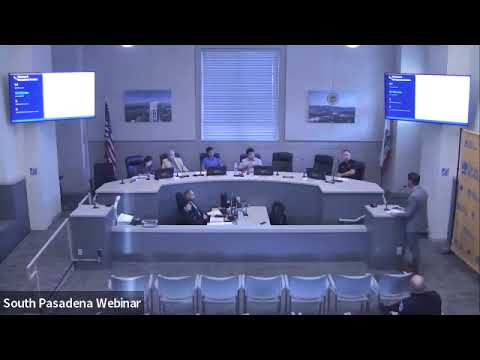
Tim Schofield, the city of South Pasadena’s IT systems manager, briefed the Public Safety Commission on March 24 about steps taken since he joined the city in October 2025 to strengthen the city’s IT and cybersecurity posture. Schofield said staff-run phishing campaigns reduced staff susceptibility from about 60% to roughly 16%, close to the industry benchmark of 15 percent.
Schofield said an initial vulnerability audit identified about 220 issues; remediation work has cut that list to roughly 75 remaining vulnerabilities, eight of them classified as critical. He said the city adopted four IT governance policies covering hardware refreshes, internet security, data sharing and cloud agreements, and vendor/contract management to address longstanding policy gaps when the city moved from an outsourced model to an in‑house IT manager.
On telecommunications, Schofield described a line audit that reviewed 97 circuits and uncovered about $280,000 in annual savings. He said the city found five CodeBlue emergency call poles with nonfunctional lines (no calls logged since 2023), canceled the associated telephony lines with AT&T, sought retroactive credits, engaged the pole vendor about lower‑cost LTE options, and posted signage marking the poles as nonfunctional while alternatives are evaluated.
Schofield said part of the work plan for 2026–27 is to build resiliency for 911 services, including migrating some analog lines to fiber or digital transmission and ensuring compatibility with Verdugo (the regional dispatch partner) for next‑generation dispatch handoffs. He told the commission that cost savings he identified reduced a previously anticipated telecommunications funding shortfall; staff presented the findings to the finance committee as part of budget planning.
Commissioners asked whether the short‑term savings would cover planned fiber work and how cost‑sharing with Verdugo operates. Schofield replied that the savings reduced an earlier projected need to increase the telecommunications appropriation (budgeted at $500,000 but previously projected closer to $850,000) and that the city pays Verdugo for dispatch services and the data transmission line; any next‑generation upgrade requires like‑for‑like capability on both ends.
Schofield closed by listing the city’s guiding frameworks — NIST, CIS, CJIS, NFPA and the California Privacy Rights Act — and said the IT team will continue to pursue vulnerability remediation, policy development, vendor rationalization and 911 resiliency work in 2026–27.