Residents and students press planning commission to add bike parking, pedestrian priorities to transportation chapter
Loading...
Summary
During a comprehensive‑plan transportation chapter review, residents and Washington and Lee students urged the Planning Commission to elevate bike parking, pedestrian safety and county connectivity; staff agreed to add or reframe language and consider a targeted bike‑parking study or project.
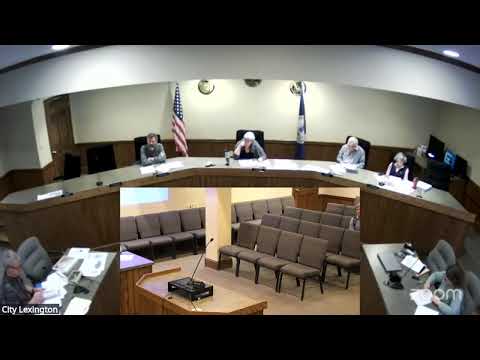
The Lexington Planning Commission spent the bulk of its March 26 meeting reviewing the transportation chapter of the draft comprehensive plan and heard several public commenters press for more visible bike‑parking commitments and pedestrian safety measures.
Jeremy Crute of the Central Shenandoah Planning District Commission gave a high‑level presentation of the chapter’s themes and noted that stakeholder engagement and VDOT data generally aligned: pedestrian improvements and maintenance ranked high among respondents, downtown parking showed the greatest public concern, and the city’s roadway network broadly has capacity for projected traffic. Crute reported roughly 540 crashes over about nine years — an average near 60 per year — with 74 resulting in injuries and 12 involving pedestrians. VDOT had identified North Lee Highway near its intersection with Nelson as a potential safety improvement area.
Multiple public commenters urged stronger action on bicycle infrastructure. Evan Clark, a Washington and Lee student, told the commission the draft’s parking section omits bike parking and cited a downtown parking study he said shows 66 percent utilization of 1,155 spaces; he recommended low‑cost, high‑impact bike‑parking installations (quoted vendor prices of roughly $350–$500 per bike space) and urged the plan to foreground mobility equity for all ages and abilities. Other commenters asked staff to correct map errors, prioritize traffic calming downtown, and improve cross‑jurisdictional pedestrian/bike connectivity to county destinations.
Commissioners and staff discussed options: (1) elevate bike parking language in the goals and strategies, (2) add a discrete short‑term project to identify and install priority bicycle parking (or perform a targeted bike‑parking study to produce locations and cost estimates), or (3) weave bike‑parking requirements into other short‑term projects. Staff said several priority transportation projects already derive from the city’s bicycle‑and‑pedestrian plan and the previous comprehensive plan, and that VDOT will supply cost estimates when the draft is forwarded for review.
On wording, commissioners suggested removing phrasing that they felt privileged cars over people (for example, replacing or rewording the clause that reads “ensure safe and efficient connections for cars and people”), clarifying map legends and pre‑annexation boundaries, and making traffic‑calming and pedestrian signal improvements more prominent in short‑term priorities. Staff agreed to update maps, confirm the VDOT data alignment for projected traffic maps, and return revised language and graphics. Commissioners asked staff to evaluate whether an explicit downtown bike‑parking project or a short bike‑parking study is feasible as a short‑term priority that could be carried forward for funding.