Get Full Government Meeting Transcripts, Videos, & Alerts Forever!
Get email alerts on the Public Services topic
No spam. Unsubscribe anytime.
Lake Forest council renews five-year OC Animal Care contract amid public calls to consider Mission Viejo alternative
Summary
After a lengthy public hearing with divided testimony, the Lake Forest City Council voted unanimously to renew a five-year contract with Orange County Animal Care (OCAC) for animal services but amended the motion to keep dialogue open about transitioning services (Mission Viejo Animal Services) as part of strategic planning.
The Lake Forest City Council voted unanimously March 17 to renew a five-year contract with Orange County Animal Care (OCAC) to provide animal-control and shelter services, after a sustained public debate over service quality, costs and alternatives.
City staff presented a Baker Tilly comparative analysis between OCAC and Mission Viejo Animal Services (MVAS). Al Zelenka of Baker Tilly told the council the review considered operations, response times, fee schedules, resident satisfaction surveys and costs: OCAC's estimated net cost to Lake Forest for FY 2026-27 was approximately $674,000, while MVAS's draft proposal showed costs above $1,000,000 for the first year plus about $260,000 in start-up capital expenses.
"The services provided by OCAC to the city of Lake Forest have been meeting or exceeding the needs of the community for over 10 years," Zelenka said while summarizing Baker Tilly's findings; he recommended renewing with OCAC and negotiating improved performance metrics such as response times and a possible dedicated Lake Forest animal-control officer.
Supporters of moving to MVAS and local municipal providers made passionate appeals during public comment. "Lake Forest would benefit from a provider that is more connected to the community and actively works with residents," said Jenna Olsen, a Lake Forest resident and volunteer, urging the council to consider MVAS. Dozens of commenters cited news reports, grand-jury findings, alleged mismanagement and data discrepancies at OCAC; others defended OCAC's services and pointed to the logistical and budgetary challenges of switching providers.
OCAC deputy director Samantha Atkinson told the council the shelter is open seven days a week and that the agency stopped requiring appointments in January 2025; she also described intake and community foster programs for kittens. "We take animals that are sick, injured, aggressive, nursing mothers or underage kittens," Atkinson said, and described community fostering and kitten-care kits for residents.
Council members pressed staff on transition mechanics and timing. The OCAC contract before council is a standard five-year form approved by the Board of Supervisors; cities choosing to leave would need to notify in year four to depart at the end of year five, staff said. Several council members said transitioning would require a lengthy multi-city negotiation and the time to build capacity at an alternate provider would likely exceed the May 30 contract deadline. Staff estimated a 15-month transition if pursued aggressively.
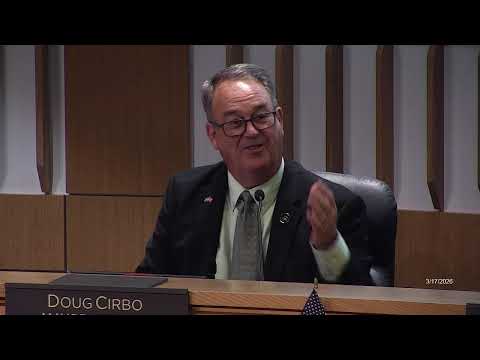
Councilmember Voigt moved to accept staff's recommendation to renew with OCAC and add a friendly amendment directing staff to continue dialogue with MVAS and include consideration of a transition in the city's upcoming strategic planning process. The motion passed unanimously. Council directed staff to negotiate performance metrics with OCAC, including considering a dedicated OCAC officer for Lake Forest and closer performance reporting.
Council and staff also invited OCAC to respond in writing to specific allegations raised at the hearing and to work with the city to improve response times and community outreach. The contract renewal takes effect under the standard terms approved by the Board of Supervisors; notifying intent to explore alternatives would occur in year four if the council chooses that path.