Get Full Government Meeting Transcripts, Videos, & Alerts Forever!
Get email alerts on the Historic Preservation topic
No spam. Unsubscribe anytime.
Grass Valley committee approves window replacement at 439 Veil Street with condition to preserve original profile
Summary
The Development Review Committee approved exterior window replacements at a Priority 2 historic property, finding a CEQA categorical exemption and adding a condition that any future window replacement must replicate the original window profile. Staff had issued a violation earlier in 2026 and a building permit was later issued.
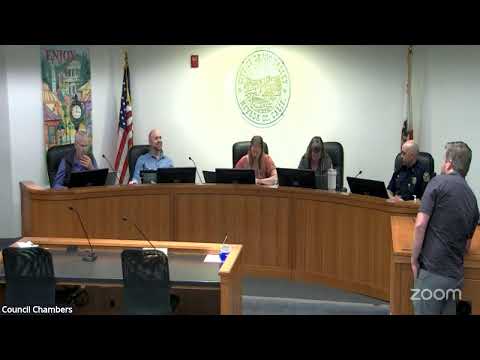
The Grass Valley Development Review Committee on March 24 approved a plan revision to allow recently installed vinyl windows at 439 Veil Street to remain, while adding a condition that any subsequent window replacement "shall replicate the profile of the original windows," the committee chair stated during the motion.
The action followed a staff report from City Planner Amy Wolfson that described the property as a roughly 1,795-square-foot residential structure listed as a Priority 2 historic resource in the city's inventory, with assessor records dating the house to about 1880 and city records noting five independent units on the parcel since at least January 1986. Wolfson said the building official issued a violation notice in January 2026 after work began and that a building permit was issued in February 2026; the permit description indicated a like-for-like window replacement.
The applicant, identified in the staff report as Jaya Green, told the committee the intent was to replicate a Sears-catalog profile from about 1910 and that the windows installed are single-hung units intended to match the house's historic appearance. "We've always wanted to, you know, maintain a historical profile," the applicant said.
Committee members and the consulting architect discussed whether the product installed matches the manufacturer's brochure and whether the installed windows' white, flat vinyl profile "dilutes" the house's historic character. One member said the new windows are "flatter" and that the all-white treatment changed the house's look; others noted the historic commission had recommended approval on March 10, observing that the original window openings and surrounding trim remained intact.
During deliberations members also emphasized code and safety topics: one member flagged that tempered glass and egress are required in specific locations and asked whether those requirements had been met; the applicant said the plans addressed egress and tempered glass as required.
Wolfson moved to approve the exterior modifications as modified at the meeting, to adopt findings of fact, and to determine the project categorically exempt under CEQA section 15301, class 1, as described in the staff report. A committee member seconded the motion; the chair called for the vote and announced the motion passed.
No members of the public commented either in the chamber or virtually during the public-comment period.
The committee's approval includes the added condition that future window replacements replicate the original windows' profile; the motion also recorded the CEQA determination and adoption of findings as set out in the staff report. The applicant thanked the committee and the meeting proceeded to other business.
What happens next: the committee's action approves the plan revision subject to the conditions of approval as adopted; the transcript does not record individual board vote tallies beyond the chair's announcement that the motion passed.