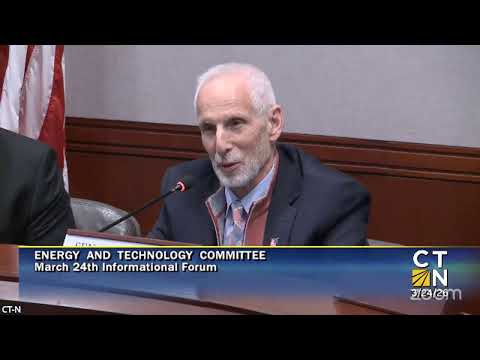
DEEP says Senate Bill 4 reforms and long‑term contracts are part of the strategy to limit volatility
Loading...
Summary
DEEP told the committee that SB4’s mix of procurements, oversight and program adjustments—plus new grid‑scale purchases and Millstone/Seabrook contracts—help hedge wholesale market volatility and can offset portions of the public benefits charge over time.
Commissioner Dykes of the Department of Energy and Environmental Protection told the Energy and Technology Committee that Public Act 25‑173 (Senate Bill 4) was designed to attack affordability by addressing multiple bill components: supply, transmission, delivery and the public benefits charge.
DEEP emphasized that supply volatility in ISO New England has been a growing problem since the pandemic and that state‑led procurements can provide a hedge. "We've brought on about 2,100 megawatts of new grid scale resources, as well as 1,100 megawatts of behind the meter generation," DEEP said. DEEP framed those procurements and the Millstone/Seabrook contracts as deliberate hedges against higher wholesale prices.
On offshore wind, DEEP noted Revolution Wind reached first power in March and said the contract is expected to produce net savings in the counterfactual model: "The Revolution Wind project ... we expect is going to deliver about a 100 millions per year in customer savings over the life of the 20 year contract," the commissioner said, and added the contract purchase price is about $99 per MWh.
DEEP acknowledged uncertainty in long‑term modeling but said the state is applying multiple levers: coordinated multi‑state procurements, cost‑benefit tests, competition in RFPs and oversight measures for transmission asset‑condition projects. DEEP also described SB4 provisions that allow for community opt‑ins and exploratory work on new nuclear development as a narrowly framed, community‑led process.
Senator Fazio and other committee members pressed DEEP for transparent modeling and independent verification of savings estimates; DEEP said additional modeling could be done but would require resources and cautioned that any counterfactual depends on many unpredictable global factors such as weather and fuel markets.
Next steps noted to the committee included DEEP and PURA monitoring of nuclear contract rates, continued RFP activity for zero‑carbon resources, a front‑of‑meter storage RFI, and technical work on system efficiency goals that will inform future rate design.