Get Full Government Meeting Transcripts, Videos, & Alerts Forever!
Get email alerts on the School Finance topic
No spam. Unsubscribe anytime.
Auditor General flags Sierra Vista USD as high financial risk amid enrollment and reserve declines
Summary
The Arizona Auditor General told the Sierra Vista Unified School District governing board that the district is among nine highest‑risk districts in the January 2026 financial risk analysis, citing steep enrollment drops, sharply reduced operating and capital reserves, and the redirection of capital funds to operations.
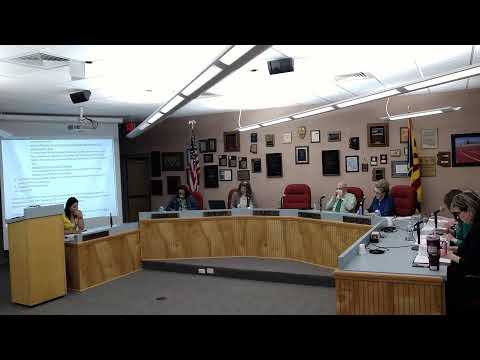
The Arizona Auditor General's office told the Sierra Vista Unified School District Governing Board on March 17 that the district ranks among nine highest‑risk school districts in the office's January 2026 financial risk analysis.
Chris Watrebeck, manager of the Auditor General's Accountability Services Division, and Michael Carnahan reviewed the district's results and said the analysis flagged the district on six measures, including significant declines in student counts and reserves. "For your district, it has a 1‑year decline of 8.82% and a 4‑year decline of 20.56%," Michael Carnahan said, noting that the weighted student‑count decline contributed to the district receiving the maximum risk points for that measure.
Why it matters: those enrollment declines reduce state funding tied to student counts and, combined with large reserve reductions, shrink the district's spending cushion ahead of next year's budget. The auditors reported the district reduced operating budget limit reserves by 46.65% in the most recent fiscal year and reported an 88% decline in general fund balance from fiscal 2024 to 2025. Michael Carnahan also said the district redirected 100% of its intended capital monies to operations in the current year, a practice the analysis treats as a heightened risk when sustained.
The Auditor General's presentation laid out the methodology and data sources used for each measure, and recommended that district management monitor monthly ADE student‑count and budget‑limit reports and use the office's action plan template. "The district's declining student enrollment is an area of concern and the board should be considering how that affects its budget decisions going forward," Watrebeck told the board.
Board members thanked the auditors and asked whether the Auditor General's office provides guidance on effective strategies districts have used to respond to similar trends. Watrebeck said the office posts action plans submitted by high‑risk districts and focuses on reporting analysis results and district plans rather than evaluating which interventions ‘work’ across districts.
What the numbers in the report showed: the auditors walked the board through the Financial Risk Analysis website, highlighting downloadable datasets and measure definitions. Among the figures cited on the district page were a drop in total operating budget authority from nearly $38,400,000 in FY2021 to under $31,700,000 in FY2026 and an almost $1,900,000 reduction in capital spending authority across the same period, yielding roughly $8,600,000 less spending authority net of both funds.
Next steps: the auditors said the district's superintendent provided an action plan to the Auditor General's office and that the office will publish an updated analysis in January 2027 reflecting newly available data. Board members were told to review posted action plans and to monitor monthly ADE reports as they prepare for the FY2027 budget cycle.
The board did not take formal action on the presentation; the item concluded with a short Q&A and the meeting continued to scheduled action items.